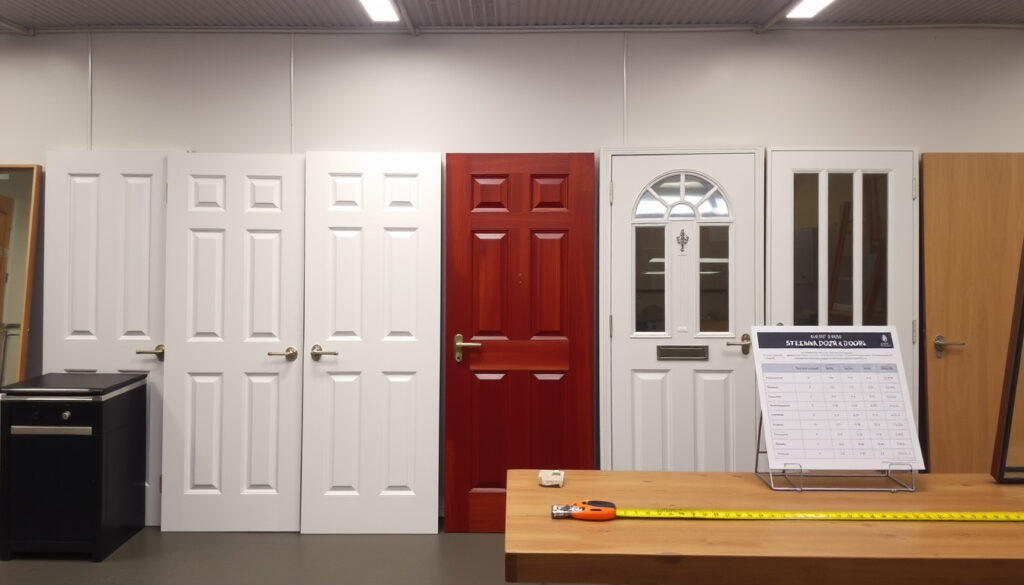
Internal Door – UK Types, Sizes, and Complete Buying Guide
Choosing the right internal door for a UK home involves more than picking a style that fits the decor. Buyers face decisions about core construction, finish, glazing, frame compatibility, and fire safety — all within a market where standard sizes and price ranges vary widely. This guide examines the key types, features, and buying considerations to help you make an informed choice.
Internal doors define the flow and feel of a home. They separate rooms, control light and sound, and contribute to overall energy efficiency. With options ranging from lightweight hollow-core doors to heavy solid oak designs, understanding the differences is essential before making a purchase.
The UK market offers a broad selection of internal doors, from budget-friendly flush models to premium glazed or fire-rated doors. Retailers including B&Q, Screwfix, Toolstation, and Wickes each carry distinct ranges, making it worthwhile to compare both product specifications and prices before buying.
What are internal doors with glass?
Glazed internal doors incorporate glass panels within the door structure, allowing natural light to pass between rooms while maintaining privacy. They are commonly used in hallways, living rooms, and kitchens where light transmission is valued. The glass is typically toughened or laminated to meet safety standards.
Internal doors with glass panels for light transmission between rooms.
Dense, soundproof, and heavy — ideal for bedrooms and quiet spaces.
Doors that come already painted or lacquered, ready to install.
Meeting building regulations for fire safety, typically rated FD30 or FD60.
Key insights for buyers
- The most popular internal door styles in the UK are oak, white, and glazed doors, based on retailer product ranges and filter options.
- Finished doors save time but limit customisation; unfinished doors are cheaper but require painting or staining.
- Standard internal door width in the UK is 762mm (30 inches) and height 1981mm (78 inches), with variations available.
- B&Q and Screwfix offer extensive online and in-store ranges, often with different price points and exclusivity.
- Hollow-core doors are the lightest and cheapest, while solid-core and solid-wood doors offer better durability and sound insulation.
- Fire-rated doors are required in specific locations under building regulations, such as between a house and an attached garage.
| Door Type | Common Materials | Typical Price Range | Best For |
|---|---|---|---|
| Hollow core | MDF, engineered timber | £30–£80 | Low-traffic areas, budget projects |
| Solid core / engineered core | Engineered timber, particleboard core | £50–£150 | Bedrooms, noise-sensitive rooms |
| Solid wood | Oak, pine, other hardwoods | £100–£300+ | Period homes, high-end interiors |
| Glazed (with glass) | Timber or MDF frame, toughened glass | £80–£250 | Hallways, kitchens, living rooms |
| Fire-rated (FD30/FD60) | Engineered timber, fire-resistant core | £50–£300+ | Garage connections, multi-storey homes |
| Pre-finished (painted/lacquered) | MDF, engineered timber | £50–£180 | Quick installation, consistent finish |
| Unfinished (ready to paint) | MDF, pine, engineered timber | £30–£120 | Custom colour matching, DIY projects |
| Panel doors | MDF, solid wood | £40–£200 | Traditional interiors, versatility |
What types of glass are used in internal doors?
Toughened glass is the most common choice for glazed internal doors, as it is required by safety standards in most domestic applications. Laminated glass offers additional sound insulation and is sometimes used in doors where noise reduction is a priority. The glass can be clear, frosted, patterned, or textured depending on the desired level of privacy.
Where can I buy glazed internal doors?
Glazed internal doors are widely available from major UK retailers. B&Q Internal Doors carries a selection of glazed options in various sizes and finishes. Screwfix Internal Doors also offers glazed models, often in pre-finished white or oak. Specialist retailers such as Doorstore, JELD-WEN, and Todd Doors provide additional ranges with different glass styles and panel configurations.
What are internal doors with frame?
Internal doors with frame refer to doorsets that include both the door slab and the surrounding frame, often pre-assembled for easier installation. This is different from buying a door slab alone, which requires sourcing a separate frame and hinges.
Do internal doors always come with a frame?
No, internal doors are most commonly sold as door slabs only, without a frame. The frame — also called the lining or casing — is usually purchased separately. Some retailers, however, offer pre-hung doorsets that include the frame, hinges, and sometimes even the latch, making installation simpler for DIYers.
What is a pre-hung internal door?
A pre-hung internal door arrives with the door slab already attached to the frame via hinges. The entire unit is designed to be fitted into a prepared opening. This option is especially useful for new builds or renovations where the wall opening is still exposed, as it reduces the need for precise measuring and mortising of hinges.
UK buying guides consistently recommend measuring width, height, and thickness of the opening or old door before ordering. Width should be measured at the top, middle, and bottom; height at the left, centre, and right. Thickness typically ranges from 35mm to 40mm for standard doors, with fire doors often reaching 44mm. Accurate measurements help avoid costly returns and fitting delays.
What are finished internal doors?
Finished internal doors come pre-painted, lacquered, or primed from the factory, meaning they can be installed immediately without additional surface treatment. Unfinished doors, by contrast, arrive bare and require painting, staining, or varnishing before use.
What is the difference between finished and unfinished internal doors?
Finished doors save time and ensure a consistent, factory-applied coating that is often more durable than a hand-painted finish. They are available in white, oak, and other common colours. Unfinished doors offer greater flexibility in colour choice and can be matched to existing trim or walls. The trade-off is the extra labour and skill required to achieve a professional result.
Can I paint unfinished internal doors?
Yes, unfinished internal doors are designed to be painted or stained. The wood or MDF surface should be lightly sanded, primed if necessary, and then coated with a suitable paint or varnish. Multiple thin coats typically produce a better result than one thick coat. For MDF doors, a primer is recommended to seal the surface before painting.
The long-term cost comparison between finished and unfinished doors is not straightforward. A cheaper unfinished door may cost more overall once paint, primer, brushes, and labour (whether DIY time or professional decorator fees) are factored in. For DIYers with painting experience, unfinished doors can be more economical. For those who want a ready-to-fit solution, pre-finished doors often represent better value despite the higher upfront price.
Where can I buy internal doors at B&Q and Screwfix?
Both B&Q and Screwfix are major UK retailers offering extensive internal door ranges online and in-store. Their collections overlap in some areas but also include exclusive brands and price tiers.
What internal door brands are available at B&Q?
B&Q stocks internal doors from brands including their own range, as well as models from manufacturers such as Doors Direct and other suppliers. The selection includes white, oak, glazed, panel, and fire-rated doors, typically in standard UK sizes. B&Q also offers a made-to-measure service for non-standard openings.
Does Screwfix offer free delivery on internal doors?
Screwfix offers free delivery on orders over a certain threshold, though this varies by product and location. Internal doors, especially larger or heavier items, may be subject to delivery charges. It is advisable to check the current delivery policy at checkout, as terms can change. Screwfix also offers a click-and-collect service from local branches.
How to choose the best internal door for your home?
Choosing the right internal door involves balancing style, function, budget, and regulatory requirements. The following subsections address the most common questions buyers face.
What is the standard internal door size in the UK?
The most common standard height for internal doors in the UK is 1981mm. Standard widths include 610mm, 686mm, 762mm, and 838mm, with 762mm (30 inches) being the most widely used for bedrooms and living areas. Less common widths such as 457mm, 533mm, and 914mm are also available. Door thickness typically ranges from 35mm to 40mm, although fire doors often measure 44mm. Toolstation’s buying guide provides a detailed breakdown of these dimensions.
Should I choose a solid core or hollow core internal door?
Hollow core doors are lightweight and inexpensive, making them suitable for low-traffic areas where sound insulation is less important. Solid core doors, also called engineered core doors, are denser and heavier, offering better soundproofing and a more substantial feel. Homebuilding’s buying guide notes that solid core doors are a middle-ground option between hollow core and solid wood, balancing cost with performance. Solid wood doors are the heaviest and most durable, but also the most expensive.
Do I need a fire-rated internal door?
Fire-rated doors are required in specific locations under UK building regulations. Approved Document B (Fire Safety) mandates fire doors in certain circumstances, such as between a house and an attached garage, in multi-storey dwellings where a room opens onto a stairwell, and in flats or HMOs. The most common ratings are FD30 (30 minutes fire resistance) and FD60 (60 minutes). Building Regulations Approved Document B (Fire Safety) provides official guidance. Whether a specific room requires a fire door depends on the building type and layout, and local building control may have additional requirements.
Fire doors must meet British Standard BS 476 Part 22 or BS EN 1634-1 for fire resistance. They are typically thicker (44mm) than standard doors and include intumescent seals that expand when exposed to heat. Not every internal door needs to be fire-rated — only those in specific locations as defined by building regulations. If in doubt, consult a qualified building inspector or your local authority’s building control department.
How have internal door designs changed over time?
- Pre-20th century: Solid timber doors, often with raised and fielded panels, were the standard. These doors were handmade and heavy, reflecting the craftsmanship of the period.
- Mid-1900s: Hollow-core flush doors became popular as a cost-effective alternative. Their lightweight construction made them easier to mass-produce and install.
- 1990s–2000s: MDF and engineered wood doors rose in popularity, offering a smooth surface for painting and greater dimensional stability than natural wood.
- 2010s: Glazed doors and barn-style sliding doors gained traction as interior design trends shifted toward open-plan living and natural light.
- 2020s: Fire safety and acoustic performance have become central considerations, driven by stricter building regulations and growing awareness of sound insulation in modern homes.
What is known and what remains uncertain about internal doors?
| Established Information | Information That Remains Unclear |
|---|---|
| Finished doors come ready to install; unfinished doors require painting or varnishing. | Which option is more cost-effective in the long term depends on DIY skill level and local labour costs for painting. |
| Building regulations require fire doors in specific locations, such as attached garages and multi-storey dwellings. | Which specific rooms in a given home require a fire door varies by local authority interpretation and building type. |
| Toughened or laminated glass in glazed doors is safe for domestic use. | Glazed doors are generally less soundproof than solid doors, but the exact acoustic performance depends on glass type, thickness, and door construction. |
What is the difference between internal and external doors?
Internal doors are designed for use inside a building. They are lighter in construction, have simpler locking mechanisms, and do not require weatherproofing. External doors, by contrast, are thicker, insulated, and fitted with security-rated locks and weather seals to withstand outdoor conditions. The core difference lies in their purpose: internal doors prioritise privacy, light control, and room division, while external doors focus on security, insulation, and weather resistance.
This distinction affects material choice as well. Internal doors are commonly made from MDF, engineered timber, or lightweight solid wood, whereas external doors use solid hardwood, composite materials, or steel-reinforced constructions. Fire-rated internal doors, however, can approach the thickness and weight of some external doors, particularly in higher-rated models.
For buyers looking for a coordinated interior style, matching the finish of internal doors with other home fixtures can create a cohesive look. For more on home fixture choices, see the Light Switches – The UK Buyer’s Guide for 2025.
Where can I find trustworthy guidance on internal doors?
Official building regulations and independent consumer advice organisations provide the most reliable information on internal door standards and installation. The following sources are widely referenced in the industry.
“Building Regulations Approved Document B (Fire Safety) – England and Wales sets out the legal requirements for fire doors in residential buildings.”
— Building Regulations Approved Document B
“Fire resistance testing for doors is carried out in accordance with British Standards BS 476-22 or BS EN 1634-1.”
— British Standards Institution
“Independent reviews and buying guides from consumer organisations like Which? offer practical advice on door types, installation, and value for money.”
— Consumer advice publications
Which? Internal Doors Reviews provides independent assessments of various door brands and models. Industry bodies such as Fensa also offer guidance on installation standards for doors and windows. For general buying advice, the Doors2Floors buying guide and JELD-WEN’s cost guide provide practical information on pricing and fitting.
What should I look for when buying an internal door?
A practical approach to buying an internal door in the UK involves measuring the opening carefully, choosing the core type based on insulation and budget needs, confirming whether a fire-rated door is required, and then comparing door-only versus doorset pricing across retailers. For a different type of buying guide, you may also find the Chanel Bag – UK Prices 2025, Styles and Buying Guide useful for understanding luxury purchasing decisions.
Frequently asked questions
What is the difference between internal and external doors?
Internal doors are lighter, less weatherproof, and often have simpler locks. External doors are thicker, insulated, and security-rated to withstand outdoor conditions.
How much do internal doors cost?
Standard flush doors start around £40, while solid oak doors can exceed £300. Prices vary by material, finish, and retailer. Hardware adds roughly £10–£100 per door.
Do internal doors need to be fire rated?
Only in specific circumstances, such as rooms with sleeping risk (e.g., bedrooms in multi-storey houses) or between house and garage. Check local building regulations for your property.
What are the standard sizes for internal doors?
Standard UK sizes: width 762mm (30 in), height 1981mm (78 in), thickness 35–45mm. Non-standard sizes are available from some retailers for an additional cost.
How do I measure for an internal door?
Measure the width at top, middle, and bottom of the opening. Measure height at left, centre, and right. Measure thickness of the existing door or frame. Allow approximately 2–3mm clearance on each side.
Can I install an internal door myself?
Yes, with basic carpentry skills. Pre-hung doors are easier to install than door slabs. For precise fitting, especially in non-standard openings, professional help is recommended.
More related posts
 Jac Morgan – Wales Captain’s Career, Family & Latest News
 Jamie O’Hara – Biography, Football Career and Talksport Role 2025
 Tammy Abraham – Profile, Stats, Injury and Career Timeline
 Leonard Rossiter – Cause of Death, Wife, Daughter and Net Worth
 Emily Black – Age, Social Media and Content Profile
 Gregg Wallace – Racial Disparities in Traffic Stops and Police Treatment
 Ken Barlow – Age, Actor, and Leaving Coronation Street in 2025
 Jamie Campbell Bower – Biography, Vecna Role, and 2025 Updates
