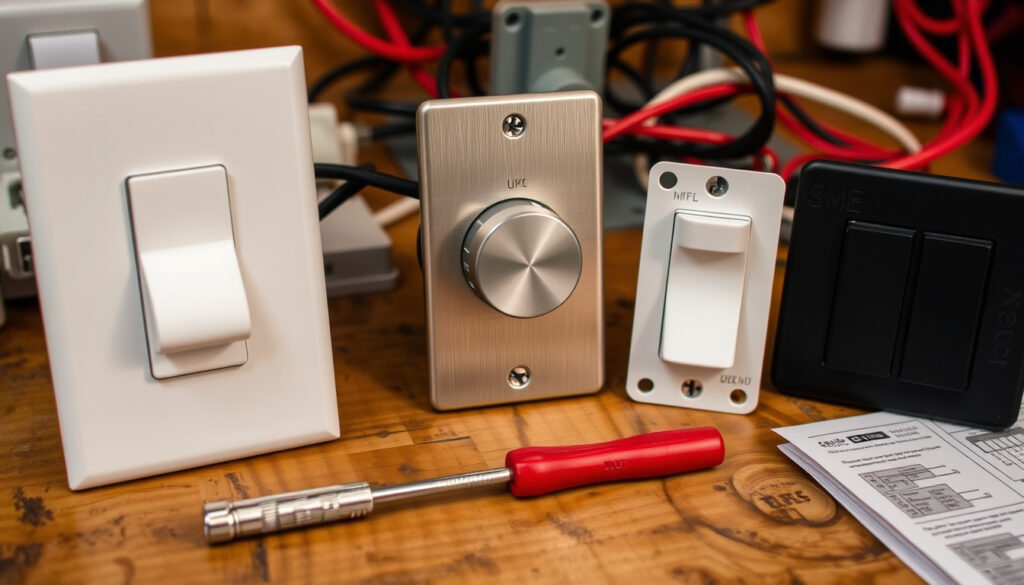
Lighting Switch UK – Complete Guide to Types, Wiring & Buying
Every UK home has them, but few give them much thought until a renovation or replacement is needed. Light switches are a small detail that can define a room’s character, and choosing the right one involves more than picking a colour. From wiring standards that must be followed to the growing range of designer finishes, the market for light switches in the UK has expanded considerably. This guide covers the full picture: how to wire a switch safely, which types and finishes suit different interiors, which retailers offer the best range, and what the future of home lighting control looks like.
Whether you are a homeowner planning a DIY swap or someone starting a full refurbishment, understanding the difference between a one-way and a two-way switch, knowing what back box depth is needed, and recognising the importance of earth connections on metal plates can save time, money, and frustration. The UK market is split between functional trade options available at major retailers and premium designer collections that prioritise aesthetics. Both have their place, and this article lays out the facts so you can decide with confidence.
Below, everything is organised by the questions most people ask when researching light switches. Wiring instructions come first, followed by product comparisons, retailer information, and broader context about the market and regulations. Every fact is drawn from established sources, and where information is not fully settled, that is made clear.
How Do I Wire a Light Switch in the UK?
- Most UK homes use 1-gang or 2-gang switches with 25mm back boxes.
- Modern light switches are trending towards slim profiles and matte finishes.
- Dimmer switches require compatible LED bulbs for proper operation.
- Screwfix offers the widest range of budget to mid-range switches.
- Dowsing & Reynolds and Swtch lead in premium designer switches.
- UK wiring regulations require earth connections on all metal switches.
| Fact | Value |
|---|---|
| UK standard voltage | 230V AC |
| Common back box depth | 25mm (16mm for shallow) |
| Wiring colours (live) | Brown (old: Red) |
| Wiring colours (neutral) | Blue (old: Black) |
| Earth wire | Green/Yellow |
| Popular switch types | 1-way, 2-way, intermediate |
Wiring a light switch in the UK follows a standard colour code that was updated in 2004 to harmonise with European practice. The brown wire (live) connects to the COM terminal, the blue or black wire (switched live) connects to L1, and the green/yellow earth wire connects to the earth terminal. For two-way switching, an additional L2 terminal is used. Before starting any work, the power must be turned off at the consumer unit and confirmed with a voltage tester. The Screwfix wiring guide provides a clear step-by-step reference for this process.
A common source of confusion is the difference between modern brown/blue wiring and the older red/black system. Homes with older wiring may have faded colours, so photographing the existing setup and labelling conductors before disconnecting is a recommended precaution. The Fedeswitchandlight installation tips emphasise the importance of documenting terminal positions and using a non-contact voltage tester to confirm the circuit is dead. Once the new switch is connected, cables should be folded neatly into the back box to avoid trapping wires behind the faceplate.
What Are the Best Modern Light Switches and Sockets in the UK?
Toggle vs Rocker vs Dimmer vs Smart
The four main types of light switch available in the UK each serve different needs. Toggle switches are the classic lever-style design, still popular for their tactile feedback and traditional appearance. Rocker switches, sometimes called “flat plate” switches, have a wider paddle that sits flush against the wall and are now the most common type in new installations. Dimmer switches allow brightness adjustment, usually via a rotary dial or slide control, but they require compatible bulbs. Smart switches add Wi-Fi or Zigbee connectivity, enabling control via phone or voice assistant, but they often need a neutral wire and a compatible hub. For a detailed comparison of all types, the Downlights FAQ on wiring explains terminal configurations for each style.
Most Popular Finishes for 2025
Finish trends have shifted noticeably in recent years. Brushed steel remains the most popular choice for modern kitchens and commercial interiors due to its industrial look and durability. Black nickel has emerged as a premium option for dark-themed rooms and luxury homes, offering a subtle, sophisticated contrast against pale walls. Chrome continues to be a classic reflective finish, often used in bathrooms and traditional modern settings. White plastic switches are still widely available and remain the default for budget-friendly renovations. The Switchhits installation guide notes that brushed steel and black nickel finishes need careful handling to avoid scratching and recommends mild detergent or window cleaner for maintenance.
How to Choose for Your Interior Design
Matching switch finishes to existing room hardware is a simple way to create a cohesive look. Brushed steel pairs well with modern stainless steel appliances and taps, while black nickel works with darker metal fixtures and industrial-style furniture. For minimalist interiors, white or matte black switches keep the focus on the wall itself. Chrome suits bathrooms and kitchens where reflective surfaces are already present. For a broader view of what the premium end of the market offers, the Lighttrend guide covers both wiring and design considerations for contemporary switches.
When choosing a finish, look at the door handles, taps, and light fittings already in the room. Consistency across metals creates a professionally designed feel. Brushed steel works in modern kitchens, white suits minimalist or scandi interiors, and black nickel adds contrast in industrial or dark-themed spaces.
What Light Switches Does Screwfix Sell?
Range Overview
Screwfix stocks one of the widest selections of light switches in the UK, covering everything from basic white plastic models to brushed steel and chrome finishes. Their range includes toggle, rocker, dimmer, and smart switches, with options for 1-gang, 2-gang, and multi-gang configurations. The retailer is particularly strong in the mid-range market, offering reliable brands at competitive prices. Many products include technical specifications such as back box depth requirements and terminal configurations. The Screwfix light switches category page allows filtering by finish, type, and number of gangs, making it practical for trade professionals and DIY homeowners alike.
Where Else to Buy Decorative Switches
Beyond Screwfix, several specialist retailers and designer brands cater to homeowners looking for premium aesthetics. Dowsing & Reynolds offers a curated collection of period-inspired and contemporary switches with a focus on craftsmanship and finish quality. The Switch Depot provides a broad range of decorative options, while RS Electrical Supplies stocks budget-friendly alternatives with clear technical specs. For high-end designer switches, Swtch and Fedeswitchandlight offer collections that prioritise slim profiles and unique materials. The Dowsing & Reynolds switches page showcases the premium end of the market with lifestyle imagery that helps visualise how different finishes look in a real room setting.
Are Smart Switches Worth It?
Smart switches add convenience through remote control, scheduling, and integration with home automation systems. They can reduce energy use by allowing lights to be turned off remotely, and many include dimming functionality. However, they require a neutral wire, which may not be present in older UK homes, and often need a compatible hub or bridge. Installation is more complex than a standard switch swap, and the upfront cost is higher. For homeowners already invested in a smart home ecosystem, the benefits can be significant. For those with simpler needs, a standard dimmer switch may be a more practical choice. The Electrical Safety First advice page provides guidance on safe installation of all switch types, including smart devices.
Not all smart switches work with older wiring. Homes built before 2004 may lack a neutral wire at the switch location, which is required for most smart switches to maintain power for wireless communication. Checking the wiring behind the existing switch before purchasing is essential.
Over-tightening terminal screws can distort the switch mechanism. Ignoring earth connections on metal switches is a safety risk. Mixing up old red/black wiring with modern brown/blue standards can cause shorts. Trapping wires behind the faceplate leads to uneven installation. Always turn off power and test before touching any wiring.
How Have Light Switches Evolved in the UK?
- 1880s – First push-button light switches introduced.
- 1920s – Toggle switches become the standard design in UK homes.
- 1960s – Rocker switches introduced for easier operation and a flatter profile.
- 2004 – UK wiring colours changed to harmonise with the EU, adopting brown for live and blue for neutral.
- 2010s – Smart switches and dimmers gain mainstream popularity alongside home automation.
- 2025 – Slim-profile, designer switches with matte finishes dominate the market.
The shift from purely functional devices to design-led products reflects broader changes in how people approach home interiors. Where once a white plastic toggle switch was the only option, homeowners now choose finishes that complement their decor and switches that integrate with smart home systems. The regulatory change in 2004 was a major milestone, standardising wiring colours across Europe and making installations safer for electricians and DIYers alike. For a visual reference on one-way versus two-way wiring, the UK-specific YouTube tutorial demonstrates both configurations step by step.
What Is Known and What Remains Unclear About UK Light Switches?
| Established Information | Information That Remains Unclear |
|---|---|
| UK wiring colours are standardised (Brown/Blue/Green-Yellow). | Exact stock availability at retailers varies by location and time. |
| Metal switches require an earth connection for safety. | Compatibility of specific smart switches with older wiring systems is not always guaranteed. |
| Screwfix stocks a wide range of light switches from budget to mid-range. | Future regulatory changes to wiring standards are not predictable in detail. |
| Dimmer switches require compatible bulbs (dimmable LED or halogen). | The long-term reliability of smart switch wireless protocols across different brands is still evolving. |
The table above separates what is well documented from areas where buyers and installers need to verify conditions for their specific situation. Wiring standards are firmly established under BS 7671, and the requirement for earth connections on metal switches is non-negotiable. However, product availability, compatibility with older homes, and future regulatory shifts are less certain. Checking with individual retailers or consulting a qualified electrician for older properties remains the best approach.
What Is the Current State of the UK Light Switch Market?
The UK light switch market is effectively split into two segments. On one side are functional trade products sold through retailers like Screwfix, where price, durability, and availability are the main priorities. On the other side are designer brands such as Dowsing & Reynolds and Swtch, which focus on aesthetics, finish quality, and integration with interior design trends. This split means that homeowners can find a suitable switch at almost any price point, but the choice involves trade-offs between cost, style, and technical features.
Modern trends favour slim profiles with switches that sit nearly flush against the wall, matte finishes that resist fingerprints, and integrated USB sockets for device charging. DIY installation is common for straightforward swaps, but Part P of the UK building regulations requires that certain electrical work in homes be notified to local building control. Smart switches are growing in popularity but face adoption barriers in older homes where rewiring would be needed to provide a neutral wire at the switch location. The UK Government Part P regulations outline the legal requirements for electrical installations in dwellings.
Looking ahead, wireless switches that communicate via radio frequency or Bluetooth may reduce the need for rewiring in retrofit projects. Sustainability is also gaining attention, with some manufacturers exploring recycled materials for switch plates. Touch-sensitive and motion-activated switches are becoming more common in commercial settings and are slowly appearing in residential product lines. For further reading on how different switch types compare in practice, the Light Switch – Complete UK Wiring, Types & Buying Guide provides additional detail.
Where Can I Find Reliable Information on Light Switches and Wiring?
The most authoritative source for UK wiring standards is BS 7671, the IET Wiring Regulations, which sets out the requirements for electrical installations. The IET publishes the full standard and offers guidance updates. For DIYers, the Electrical Safety First website provides practical advice on safe installation practices. Retailer guides from Screwfix, Downlights, and Fedeswitchandlight offer step-by-step wiring instructions tailored to common UK configurations. For design inspiration, Dowsing & Reynolds and The Switch Depot showcase how different finishes look in real interiors.
“UK wiring regulations require earth connections on all metal switches. Always follow local electrical safety standards (e.g., BS 7671) when installing.”
— BS 7671 (IET Wiring Regulations)
“Screwfix offers comprehensive wiring guides and sells UK-standard switches. Their light switch wiring guide covers one-way and two-way configurations with diagrams.”
— Screwfix Electrical Guide
“Luxury brands provide premium decorative options with detailed installation tips. Brushed steel, black nickel, and chrome finishes are the most popular choices for modern interiors.”
— Fedeswitchandlight Installation Tips
The IET Wiring Regulations website is the definitive source for BS 7671, while B&Q’s replacement guide offers a practical walkthrough for homeowners. For video tutorials, the YouTube comparison of one-way vs two-way wiring provides a clear visual demonstration.
What Should I Remember When Choosing or Installing a Light Switch?
Selecting the right light switch for a UK home comes down to three considerations: function, finish, and safety. Function means choosing between one-way, two-way, or intermediate switching based on how many points control the light. Finish involves matching the switch plate to the room’s existing hardware and style. Safety means ensuring the switch is compatible with UK wiring colours, that metal plates are earthed, and that the circuit is isolated before any work begins. For a deeper dive into all these aspects, the Light Switch – Complete UK Wiring, Types & Buying Guide covers the full landscape of options, regulations, and best practices.
Frequently Asked Questions
Can I install a dimmer switch on any light?
No, dimmer switches require compatible bulbs. Check the bulb packaging for a “dimmable” label. Using non-dimmable LEDs with a dimmer can cause flickering or damage.
Are smart light switches worth it?
Smart switches offer convenience and energy savings but require a neutral wire and compatible hub. They are best suited for tech-savvy homeowners already using smart home systems.
What size back box do I need for a light switch?
Standard UK back boxes are 25mm deep. Shallow 16mm boxes exist but may not accommodate dimmer or smart switches. Always check the switch depth before installing.
How do I choose the right light switch for my interior design?
Match finishes to existing room hardware such as door handles and taps. Brushed steel suits modern, white suits minimalist, black nickel suits industrial, and chrome suits traditional modern homes.
What is the difference between 1-way and 2-way switches?
A 1-way switch controls a light from a single location. A 2-way switch has an extra L2 terminal and allows control from two locations, such as at both ends of a hallway or staircase.
Do I need an electrician to install a light switch?
Replacing a like-for-like switch is a common DIY task. However, any work that involves new wiring or changes to the circuit may require notification under Part P building regulations. A qualified electrician is recommended for complex jobs.
What does the L2 terminal do on a light switch?
The L2 terminal is used for two-way switching. If your circuit is one-way, you can ignore it. In a two-way setup, L2 carries the alternative live path between two switches.
Can I use a smart switch in an older UK home?
It depends on the wiring. Many older homes do not have a neutral wire at the switch location, which smart switches typically need. A licensed electrician can check compatibility and advise on alternatives.
What happens if I connect the wires wrong on a light switch?
Incorrect wiring can cause the light to not work, create a short circuit, or pose a safety hazard. Always double-check connections and use a voltage tester after restoring power. If unsure, consult an electrician.
Are brushed steel switches difficult to keep clean?
Brushed steel and black nickel finishes can show fingerprints and require gentle cleaning. Mild detergent or window cleaner applied with a soft cloth is recommended. Avoid abrasive cleaners that may scratch the surface.
More related posts
 Jack Nicklaus – Age, Net Worth, Stats and the GOAT Debate
 Gregg Wallace – Racial Disparities in Traffic Stops and Police Treatment
 Fetal Alcohol Syndrome Face – Key Features, Photos and Medical Guide
 Keith Andrews – From Wolves Academy to Brentford Head Coach
 Brentford vs Man City – H2H, Prediction, Lineups
 Lindsay Lohan – 2025 Update on Her Life, Career and Family
 Sophie Raworth – Biography, Age, Husband, Illness, Net Worth
 Ben Whishaw – Movies, TV Shows and Personal Life Facts
