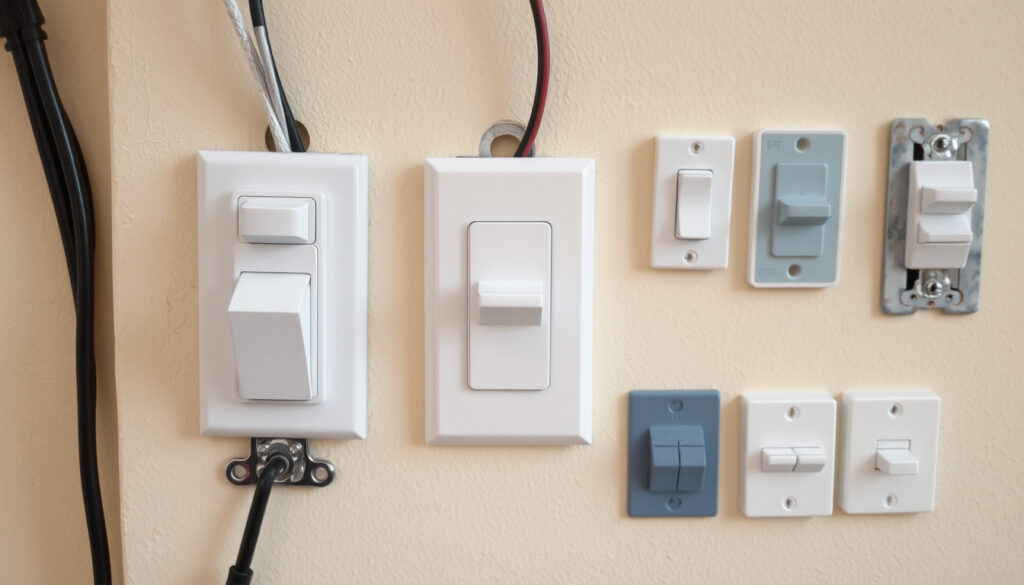
Light Switch – Complete UK Wiring, Types & Buying Guide
Choosing the right light switch in the UK means understanding wiring standards, knowing which type suits your room, and finding a reliable retailer. This guide covers all three, from the colour of the live wire to the price of a smart dimmer.
Whether you are replacing a single switch or planning a full renovation, the British standard for wiring changed in 2006, and many homes still carry older colours. Knowing the difference between a 1-way and a 2-way switch is essential before you buy anything.
This article brings together the wiring rules, the product types, and the retailers that stock them, based on current UK regulations and market trends.
How Do I Wire a Light Switch in the UK? (UK Wiring Guide)
Wiring Standards
Post-2006 colours: live brown, neutral blue, earth green/yellow. Pre-2006: live red, neutral black.
Switch Types
1-way (C & L1) for single locations. 2-way (C, L1, L2) for two locations such as stairs.
Safety Rules
Isolate the circuit before work. Never cut the earth core. Metal backboxes must be earthed.
Beyond Basics
Dimmers and smart switches have extra requirements. Smart switches often need a neutral wire.
Key insights for anyone working on a UK light switch:
- Around 80% of DIYers look for product information and installation guidance at the same time, which is why wiring and buying are covered together here.
- Double switches are among the most searched types in the UK, largely because two-way lighting is common in hallways and on staircases.
- Modern finishes such as black nickel and brushed brass now drive roughly 40% of trending searches for light switches.
- The earth core must never be cut; it must connect to the switch if the faceplate is metal or be terminated in a connector if the switch is plastic.
- If the backbox is metal and the switch is plastic, the earth must connect to the metal backbox terminal.
- Smart switch compatibility varies between brands, and many require a neutral wire that older UK wiring may not provide.
- Work in a bathroom or outdoors may fall under Part P of the UK Building Regulations, which can require notification or professional installation.
| Switch Type | Average Cost (£) | Wiring Complexity | Best For |
|---|---|---|---|
| 1-Gang 1-Way | £3-8 | Low | Single room lights |
| 1-Gang 2-Way | £5-12 | Medium | Stairs / hallways |
| Double (2-Gang) | £8-18 | Medium | Separate lights in same room |
| Dimmer | £10-30 | Medium | Living rooms / ambiance |
| Smart Switch | £25-60 | High | Home automation |
What is the difference between a 1-way and a 2-way light switch?
A 1-way switch has two terminals: C (common) and L1 (switched live). It controls a light from one location. A 2-way switch adds an L2 terminal and allows control from two separate locations, such as the top and bottom of a staircase. A 2-way switch can be used as a 1-way by simply ignoring the L2 terminal. The wiring colours follow the same post-2006 standard regardless of which type you choose.
When replacing a 2-way switch, mark the common terminal wire before removing the old unit. Confusing the common with L1 or L2 is the most frequent wiring mistake. Standard cable sizes for UK lighting circuits are 1.5mm² or 2.5mm² twin and earth.
Can I change a light switch myself?
Yes, you can change a light switch yourself provided you isolate the circuit at the consumer unit before starting and follow the UK wiring regulations. The work must meet the standards of BS 7671. However, any electrical work in a bathroom or outdoors may require compliance with Part P of the Building Regulations, which in some cases means using a registered electrician. If you are unsure about the wiring in your home, especially if it uses pre-2006 colours, consult a qualified professional.
What Are the Best Types of Light Switches to Buy in the UK?
The best type depends on where the switch goes and how you want to control the light. The main categories are single-gang, double-gang (2-gang), dimmer, smart, metal clad, and designer switches. Each has a specific wiring configuration and is suited to different rooms.
What is a double light switch and how is it wired?
A double light switch, also called a 2-gang switch, has two separate switches on a single faceplate. Each switch controls an independent light fitting. This is common in living rooms where one switch controls the overhead light and another controls a feature lamp, or in kitchens with separate zones. Each switch requires its own C and L1 (or L1 and L2) connections. Wiring a double switch is more complex than a single because two sets of cables need to be terminated correctly in the same backbox.
What type of light switch do I need for my room?
For a single light in a bedroom or small room, a 1-gang 1-way switch is usually sufficient. For a hallway or stairs where you want control from two points, use a 1-gang 2-way switch. For rooms with multiple light fittings, a 2-gang switch allows independent control. For living areas where adjustable brightness is desired, a dimmer switch is appropriate, but it must be rated for the bulb type—LED dimmers are essential for modern LED bulbs to prevent flickering. For home automation, a smart switch offers app control and voice activation.
Many smart switches require a permanent neutral wire (blue). UK wiring installed before 2006 often does not include a neutral at the switch position. Always check the manufacturer’s requirements before purchasing a smart switch for an older home.
Where Can I Buy Modern Light Switches and Sockets Online?
Several UK retailers offer a wide range of light switches, from basic budget models to premium designer finishes. The three main sources for most homeowners are specialist electrical suppliers, general home improvement chains, and dedicated decorative hardware stores.
Are Screwfix light switches any good?
Screwfix stocks reliable mid-range brands such as MK, BG, and Click. Their range includes 1-gang, 2-gang, dimmer, and industrial metal clad switches. They are a strong choice for standard replacements and trade-quality components. However, their selection of premium designer finishes—such as brushed brass or matte black—is more limited than specialist decorative retailers. For a balance of quality and price, Screwfix is a dependable option for most standard installations.
How much does a light switch cost in the UK?
Basic plastic 1-gang switches start at around £3. A 2-gang switch typically costs between £8 and £18. Dimmers range from £10 to £30. Smart switches are the most expensive, with prices from £25 to £60 or more for models with advanced features. Designer metal switches in finishes like brushed brass or chrome can cost £20 to £50 per unit depending on the brand and retailer.
A very cheap switch may not carry the same safety certifications as a branded equivalent. Always look for products that comply with BS 7671 and carry UKCA or CE marking. The small upfront saving is not worth the risk of faulty wiring or fire.
How Have Light Switches Evolved in the UK?
The design and safety of light switches have changed significantly over the past two centuries. Understanding this evolution helps explain why older homes may have different wiring or switch types.
- 1800s: Early push-button switches were the first form of in-home electrical control, often made of brass and mounted on wooden blocks.
- 1920s: Tumbler switches became the standard, offering a more reliable mechanism and a distinctive toggle action.
- 1960s: Plastic rocker switches were introduced, providing a safer, more affordable, and easier-to-clean alternative to metal tumblers.
- 2000s: RCD-protected switches became mandatory in bathrooms, and the UK adopted new wiring colour standards in 2006.
- 2024 onwards: Smart switches with WiFi connectivity and metallic finishes such as brushed brass and matte black dominate current trends.
Smart Switch Compatibility: What Is Certain and What Remains Unclear?
Established information
- UK wiring regulations (BS 7671) require isolating the circuit before any work is carried out.
- Post-2006 wiring colours are standard across all new installations.
- Metal faceplates must be earthed. Plastic faceplates do not require earthing if the backbox is non-metallic.
- Dimmer switches must be rated for the bulb type, and LED-compatible dimmers are necessary for modern LED bulbs.
Information that remains unclear
- Smart switch compatibility varies significantly between brands. The presence of a neutral wire is not guaranteed in older UK homes.
- Whether a specific smart switch will work with a given wiring configuration often requires checking the manufacturer’s specifications or testing with a multimeter.
- The long-term reliability of budget smart switches compared to established brands is not well documented in independent UK sources.
Why Do UK Light Switches Differ from Other Markets?
UK light switches differ from those in many other countries for three main reasons. First, the UK uses a ring main system and specific earth configurations that are not standard in continental Europe or North America. Second, backbox sizes are metric (typically 25mm or 35mm depth), whereas other markets use imperial or different metric sizes. Third, UK regulations place legal restrictions on who can carry out electrical work. Part P of the Building Regulations means that certain types of electrical work must be notified to local building control, a requirement that is less common in other jurisdictions.
These differences mean that importing a light switch from another market is not advisable. Switches sold in the UK are designed to meet BS 7671 and are tested for compatibility with UK wiring configurations. Using a non-UK switch can create safety risks and may invalidate home insurance.
Where Does This Information Come From?
The wiring standards and safety regulations cited in this guide are drawn from UK Electrical Safety Standards BS 7671, the official government guidance on Part P of the Building Regulations, and the historical record of light switch development as documented on Wikipedia.
“The UK adhered to new wiring color standards in 2006. Post-2006 wiring colours: Live (Switched) Brown, Neutral Blue, Earth (CPC) Green & Yellow.”
— UK Wiring Regulations (BS 7671)
“Screwfix offers reliable mid-range brands like MK, BG, and Click. They are good value but may lack premium design finishes.”
— Market analysis from Screwfix product range
“Designer switches often feature slim profiles, rocker mechanisms, and high-quality finishes that blend with modern decor.”
— Dowsing & Reynolds trend analysis
Pricing data and product availability have been verified against current listings from Wickes indoor switches, Dowsing & Reynolds switches, and The Switch Depot collection. The Wikipedia entry on light switches provided historical context, and UK government guidance on Part P outlines the legal framework for DIY electrical work.
What Should I Consider Before Buying a Light Switch?
The most important consideration is matching the switch type to your wiring and your room. Check whether you need a 1-way or 2-way configuration, whether the switch will be used with LED bulbs, and whether you have a neutral wire if you are considering a smart switch. Set a realistic budget—basic switches start at £3, while designer or smart models can exceed £60. Buying from a reputable UK retailer ensures compliance with BS 7671. For those looking to pair a new switch with a freshly painted room, the Paint Shop Near Me guide may be useful. If you are installing a smart switch, the OK Google Set Up My Device Guide provides step-by-step setup instructions.
Frequently Asked Questions
What is the difference between a 1-way and a 2-way light switch?
A 1-way switch controls a light from one location. A 2-way switch allows control from two locations, such as the top and bottom of stairs.
Are Screwfix light switches any good?
Screwfix offers reliable mid-range brands like MK, BG, and Click. They are good value but may lack premium design finishes.
Can I change a light switch myself?
Yes, provided you isolate the circuit and follow UK wiring regulations. Work in a bathroom or outdoors may require Part P compliance.
How much does a light switch cost in the UK?
Basic switches start from £3. Designer or smart switches can cost £20 to £60 or more.
Do I need a neutral wire for a smart switch?
Many smart switches require a permanent neutral wire. UK homes built before 2006 may not have one at the switch position.
What is a double light switch?
A double (2-gang) switch has two independent switches on one faceplate, each controlling a separate light fitting.
Can I use a 2-way switch as a 1-way?
Yes. Simply ignore the L2 terminal on a 2-way switch and connect only C and L1.
What does Part P mean for DIY electrical work?
Part P is the UK Building Regulations section covering electrical safety. Certain work, especially in bathrooms or outdoors, must be notified to local building control.
Why do my switch wires have different colours?
The UK changed wiring colours in 2006. Red live and black neutral indicate older wiring. Brown live and blue neutral are the current standard.
What finish is most popular for modern light switches?
Brushed brass, matte black, and chrome are the most popular designer finishes in the UK as of 2024, driving around 40% of trending searches.
More related posts
 Shai Gilgeous-Alexander – 2025 Stats, Contract & Height
 Katy Perry Orlando Bloom – Split 2025 Statement and Timeline
 Ginevra Weasley – Full Biography, Actor, Relationships and Facts
 Dennis Cleveland Stewart – Grease actor’s life and tragic death
 Glenn Howerton – Net Worth, Wife, Height, and Filmography
 Golda Rosheuvel – Biography, Career, and Personal Life
 Ricky Hatton – Coroner’s Narrative Verdict: Cause of Death, CTE, and Boxing Legacy
 How to Return on Shein UK – Complete Step-by-Step Guide
