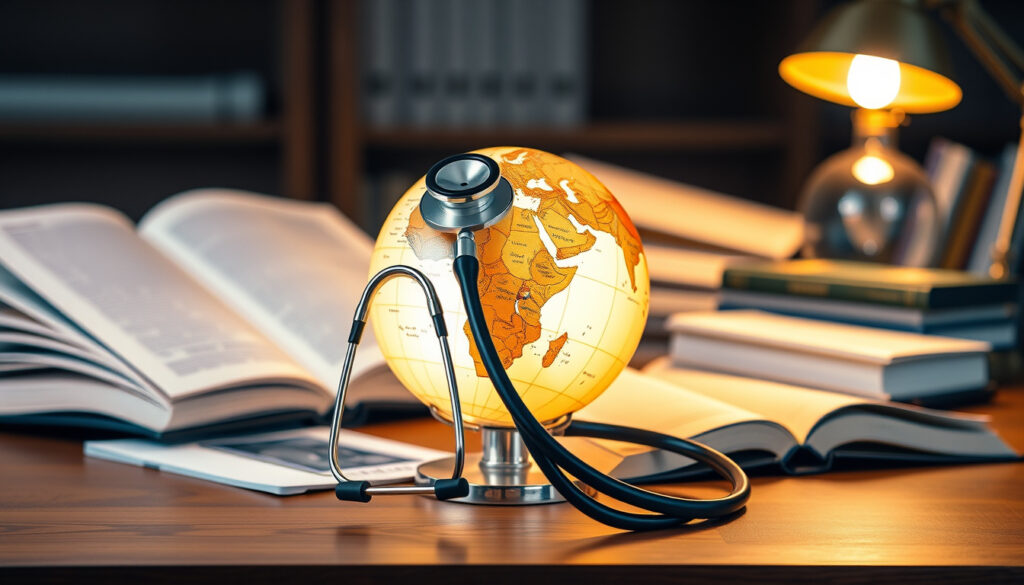
Who Is the Most Powerful Doctor in the World – The Real Answer
Bill Gates is often described as the most powerful doctor in the world, yet he holds no medical degree and has never practiced medicine. This apparent contradiction stems from the immense influence of the Bill & Melinda Gates Foundation, which has poured billions into global health initiatives, shaping policies and funding priorities at organizations like the World Health Organization (WHO). The label is metaphorical, reflecting financial and political leverage rather than clinical expertise.
The question “who is the most powerful doctor in the world” surfaces regularly in media, online debates, and academic discussions. It touches on how power is defined in healthcare – whether by budget control, institutional authority, public trust, or scientific credibility. Understanding the answer requires examining the individuals most frequently cited and the metrics used to rank them.
This analysis relies on publicly available sources and avoids speculation.
Who Is Widely Considered the Most Powerful Doctor in the World?
- Who is the most powerful doctor? Bill Gates, as a metaphorical title based on his foundation’s global health influence.
- Why Bill Gates is often cited Because the Gates Foundation is one of the largest private funders of health programs worldwide.
- Other top contenders Dr. Tedros Adhanom Ghebreyesus (WHO Director-General), Dr. Anthony Fauci (former NIAID director), and Dr. Paul Farmer (global health advocate).
- How power is measured Power can be financial, institutional, or based on public trust – no single metric exists.
Key Insights
- “Most powerful doctor” is an informal title, not a medical one – it reflects influence over global health funding and policy.
- Bill Gates’ influence stems from the Gates Foundation’s ~$50 billion endowment and its role in funding WHO, GAVI, and vaccine research.
- No single metric defines power; financial control (Gates), institutional authority (WHO Director), and public trust (Fauci) are competing measures.
- The question often surfaces in debates about the accountability of private philanthropy in public health.
- Media outlets like Politico and HowStuffWorks have explicitly used the phrase “most powerful doctor” for Gates.
- The WHO receives significant funding from the Gates Foundation – in some years, around 10% of its budget.
- Critics argue that such funding can skew WHO priorities toward donor interests rather than member-state consensus.
Fact Table: Key Figures Often Called the Most Powerful Doctor
| Entity | Claimed Power | Basis of Influence | Medical Degree? |
|---|---|---|---|
| Bill Gates | Most powerful (by funding) | Gates Foundation ($50B+ in health grants) | No |
| Dr. Tedros | Most powerful (by institution) | Director-General of WHO | Yes (PhD in public health) |
| Dr. Fauci | Most powerful (by public trust) | Top U.S. infectious disease advisor (2008-2022) | Yes (MD) |
| Dr. Paul Farmer | Most powerful (by impact) | Co-founder of Partners In Health | Yes (MD) |
Why Is Bill Gates Called the Most Powerful Doctor Despite Not Being a Medical Doctor?
The meaning of “doctor” in this context: influence vs. degree
Bill Gates is not a doctor in the medical sense. He holds no MD, PhD in medicine, or clinical license. According to Wikipedia and multiple biographical sources, he is a businessman and philanthropist. The term “most powerful doctor” is applied metaphorically to describe his substantial sway over global health policy and funding. Media outlets such as Politico and Tuko have explicitly used this language.
Gates Foundation funding: WHO, vaccine programs, and global initiatives
The Bill & Melinda Gates Foundation, founded in 1994, has become a dominant force in global health. It is a major funder of the WHO, GAVI (the vaccine alliance), and initiatives targeting malaria, tuberculosis, polio, and COVID-19. According to Britannica, the foundation’s endowment exceeds $50 billion. A WHO donor report notes that private contributions, including from the Gates Foundation, represent a significant portion of the organization’s budget. This financial leverage gives Gates unusual influence over research agendas and policy priorities.
Critics argue that the Gates Foundation’s large donations can steer WHO priorities, potentially sidelining the interests of member states. A discussion on Agora Dialogue highlights worries about a single private philanthropist having disproportionate power over global health policy. This raises questions of accountability and democratic governance.
Criticism: conflict of interest and power without accountability
The central controversy is that the Gates Foundation, while charitable, operates without the public accountability mechanisms that traditional government-funded institutions have. Its agenda-setting power can shape which diseases receive funding and which treatments are prioritized. This has led to debates about whether a non-doctor should hold such sway over medical decisions. The label “most powerful doctor” thus carries political weight.
Who Else Ranks Among the Most Powerful Doctors in the World?
Dr. Tedros Adhanom Ghebreyesus (WHO Director-General)
As head of the World Health Organization, Dr. Tedros holds institutional authority over global health standards and emergency responses. He holds a PhD in public health and has led WHO through the COVID-19 pandemic and other crises. His power derives from his position, not personal wealth.
Dr. Anthony Fauci (former NIAID director)
Dr. Fauci served as the director of the U.S. National Institute of Allergy and Infectious Diseases for nearly four decades. He became a household name during the HIV/AIDS crisis and later during COVID-19. His influence rests on scientific credibility and public trust, especially in the United States.
Dr. Paul Farmer (global health equity advocate)
Dr. Farmer, co-founder of Partners In Health, was renowned for his work in delivering healthcare to impoverished communities worldwide. His power was measured by impact rather than budget. He held an MD and a PhD in anthropology, combining clinical practice with systemic reform.
Dr. Atul Gawande (public health leader and author)
Dr. Gawande is a surgeon, writer, and public health researcher. He has influenced health policy through books like “The Checklist Manifesto” and his work with organizations like the World Health Organization. His power stems from his ability to communicate and implement practical reforms.
The figures above represent different dimensions of power: financial (Gates), institutional (Tedros), scientific (Fauci), impact-based (Farmer), and intellectual (Gawande). No single person dominates all metrics, which is why the answer to “who is the most powerful doctor” depends heavily on the definition used.
How Is the “Power” of a Doctor Measured?
Definitions: political power, funding power, medical expertise
Power in health can be understood in three main ways. Political power refers to the ability to set policies and regulations – held by officials like the WHO Director-General. Funding power involves control over financial resources, which is where Bill Gates excels. Medical expertise power is based on scientific knowledge and clinical reputation, typical of figures like Dr. Fauci.
Quantitative measures: budget control, policy influence, global reach
One can measure power by the size of the budget a person controls, the number of countries their policies affect, or the extent of their media presence. The Gates Foundation’s health grants top $50 billion, far exceeding the budgets of many health ministries. By contrast, Dr. Tedros’s power is limited by the consensus-based nature of WHO governance.
Qualitative measures: reputation, trust, media presence
Public trust and media visibility also confer power. Dr. Fauci’s approval ratings during the pandemic gave him soft power to influence behavior. Bill Gates, despite lacking a medical degree, enjoys high recognition and credibility in global health circles, partly due to his foundation’s track record.
To assess a doctor’s power, consider: (1) Financial resources under their control, (2) Institutional position, (3) Influence on policy, (4) Public trust, and (5) Scientific impact. The “most powerful doctor” label will shift depending on which factor is prioritized.
When Did Bill Gates Become So Influential in Global Health?
Key milestones in Bill Gates’ transformation from software entrepreneur to global health influencer include:
- 1994: Gates Foundation founded, initially focused on global health.
- 2000: Bill Gates transitions from Microsoft to full-time philanthropy.
- 2005: Gates Foundation becomes major funder of GAVI (vaccine alliance).
- 2008: Gates Foundation contributions to WHO exceed many member states’ dues.
- 2010: Gates partners with countries to fund polio eradication.
- 2020-2021: Gates Foundation commits $1.75B+ to COVID-19 response; Bill Gates becomes face of global health governance.
- 2023: Politico publishes article “Meet the world’s most powerful doctor: Bill Gates.”
- 2025: Ongoing debates about private influence over WHO.
Sources: Britannica, Gates Foundation, NIH overview.
What Is Certain and What Remains Unclear?
| Established Information | Information That Remains Unclear |
|---|---|
| Bill Gates is not a medical doctor; he holds no MD or PhD in medicine. | Whether Bill Gates is objectively “the most powerful doctor” – depends on definition of power. |
| The Gates Foundation is the largest private funder of global health initiatives. | Whether other individuals (e.g., WHO Director-General, U.S. Surgeon General) might be considered more powerful by different metrics. |
| Bill Gates is frequently referred to as the “most powerful doctor” by media (Politico, HowStuffWorks). | The exact ranking of power changes year-to-year; no official list exists. |
| WHO receives significant funding from the Gates Foundation (~10% of its budget in certain years). | The ethical implications of a non-doctor holding such label are debated. |
How Should the “Most Powerful Doctor” Label Be Understood?
The label is best understood as a metaphor for influence in global health, not a literal medical title. Bill Gates’ case illustrates how wealth can translate into power over research priorities, policy direction, and public perception. For readers interested in related health topics, see our guide on Fetal Alcohol Syndrome Face – Key Features, Photos and Medical Guide. However, it is misleading to equate that with the clinical authority of a practicing physician. Figures like Dr. Tedros and Dr. Fauci hold different forms of power, rooted in institutional mandate or scientific expertise. The controversy surrounding Gates highlights broader concerns about the role of private philanthropy in public health governance – a conversation that continues to evolve as the Gates Foundation’s funding and the WHO’s structure adapt to new challenges.
What Do the Sources Say?
“Bill Gates is not a doctor, but he is arguably the most powerful person in global health.”
— Politico, 2023
“The label ‘most powerful doctor’ is more about influence than degree.”
— Health HowStuffWorks, updated 2025
The Gates Foundation’s own reports and WHO donor data also confirm the scale of philanthropic funding.
Summary: Who Is the Most Powerful Doctor in the World?
The answer depends on how power is defined. By financial influence, Bill Gates is consistently cited as the most powerful figure in global health, despite lacking a medical degree. By institutional authority, Dr. Tedros holds the top position. By public trust and scientific reputation, Dr. Fauci or Dr. Farmer might be considered. The phrase is a media shorthand that reflects real influence but should not be mistaken for a medical qualification. For those interested in comparing health metrics, learn about Red Blood Cell Count – Normal Range, High and Low Causes.
Frequently Asked Questions
Who is the most powerful doctor in the world right now?
Bill Gates is frequently cited as the most powerful doctor metaphorically due to his foundation’s global health influence. However, no official ranking exists.
Is Bill Gates a doctor?
No. Bill Gates is a businessman and philanthropist. He holds no medical degree or clinical license.
Who is the most famous doctor in the world?
Dr. Anthony Fauci is arguably the most famous doctor globally, known for his leadership during HIV/AIDS and COVID-19 pandemics.
What are the top 10 countries with the best doctors?
Rankings vary, but commonly cited countries include the United States, Germany, Switzerland, the United Kingdom, Sweden, Japan, Canada, Australia, France, and South Korea.
How does Bill Gates have so much influence over the WHO?
The Gates Foundation is a major donor to WHO, contributing around 10% of its budget in some years. This funding gives it significant influence over research and policy priorities.
Who was the most powerful doctor in 2020?
In 2020, Bill Gates was widely discussed as the most powerful doctor due to his foundation’s COVID-19 response funding and media presence.
Can a non-doctor be called a doctor?
The term “doctor” can be used metaphorically for non-medical figures who exert power in health, but it is not a formal medical title. The usage is informal and can be misleading.
More related posts
 Jack Gleeson – Biography, Net Worth, and What He’s Doing Now
 Alessia Russo – Age Height Stats Partner and Career Facts
 Mike Oldfield – The Life and Legacy of a Progressive Icon
 Karen Fukuhara – Age, Husband, And Marvel Roles Explained
 Interest Rate Predictions UK – Forecasts for 2026 and Beyond
 Lauren Lyle – Age, Height, Partner, Outlander Role
 Internal Door – UK Types, Sizes, and Complete Buying Guide
 Darwin Nunez – Al-Hilal Transfer Confirmed and Career Stats
