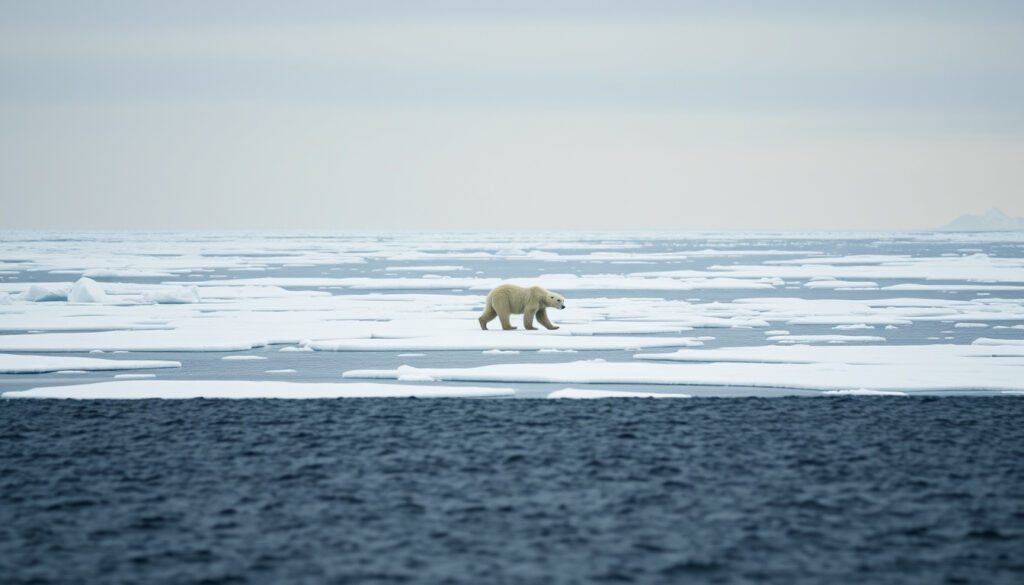
Polar Bear – Complete Guide to Size, Diet and Conservation
Polar bears (Ursus maritimus) are the largest land carnivores on the planet. Adult males typically weigh between 300 and 800 kilograms (660–1,760 pounds) and measure 200–250 centimeters (6.6–8.2 feet) from nose to tail. Females are smaller, ranging from 150 to 300 kilograms (330–660 pounds) and 180–200 centimeters (5.9–6.6 feet) in length. Standing on their hind legs, a large male can reach over three meters (nearly ten feet) tall.
Despite being classified as a terrestrial mammal, the polar bear spends most of its life on sea ice and is considered a marine mammal. Its scientific name, Ursus maritimus, means “maritime bear” — a fitting description for an animal that depends on the Arctic Ocean for survival. With an estimated global population of around 26,000 individuals across 19 subpopulations, the species is currently listed as Vulnerable on the IUCN Red List.
These apex predators are uniquely adapted to one of the harshest environments on Earth. Their size, diet, and behavior have evolved over hundreds of thousands of years to exploit the resources of the frozen north. Yet their future is uncertain, tied directly to the fate of Arctic sea ice.
How Big Is a Polar Bear? Size, Weight, and Height
Massive Size
Males 300–800 kg (660–1,760 lb)
Primary Diet
Ringed & bearded seals
Status
Vulnerable (IUCN) ~26,000 left
Habitat
Arctic sea ice
- Polar bears are the largest extant bear and land carnivore by body mass — adult males can exceed 800 kg.
- They are classified as marine mammals because they depend on the ocean for food and habitat.
- The primary threat to their survival is the loss of Arctic sea ice due to climate change.
- Not all subpopulations are declining; some remain stable while others, like the Western Hudson Bay group, show significant drops.
- A polar bear’s diet is almost exclusively carnivorous, relying on high-fat seals; they do not eat penguins as those live in Antarctica.
- Polar bear fur is actually translucent and hollow, appearing white due to light scattering; the skin underneath is black.
| Attribute | Value |
|---|---|
| Scientific Name | Ursus maritimus |
| Average Male Weight | 300–800 kg (660–1,760 lb) |
| Average Female Weight | 150–300 kg (330–660 lb) |
| Standing Height | Up to 3 meters (10 feet) on hind legs |
| Body Length | 2–2.5 meters (6.6–8.2 feet) |
| Lifespan (Wild) | 25–30 years |
| Top Speed (Land) | 40 km/h (25 mph) |
| Top Speed (Water) | 10 km/h (6 mph) |
| IUCN Conservation Status | Vulnerable (assessed 2015) |
| Estimated Population | ~26,000 (19 subpopulations) |
What Do Polar Bears Eat? The Arctic Diet Explained
Polar bears are apex predators with a diet that is heavily skewed toward meat. Their preferred prey are ringed seals and bearded seals, which provide the high-calorie blubber needed to survive in the extreme cold. They rely on Arctic sea ice as a platform for hunting, waiting near seal breathing holes or stalking seals basking on the ice.
How Do Polar Bears Hunt Seals?
Using a remarkable sense of smell, polar bears can detect seals up to 32 kilometers away. They often employ a technique called still-hunting, where they wait motionless by a breathing hole for hours. When a seal surfaces, the bear strikes with a powerful swipe. Their elongated skulls and strong bite force — 1,200 psi — evolved to help them pull seals through narrow holes in the ice.
Polar bears do not eat penguins. These two animals never meet in the wild because polar bears live in the Arctic, while penguins inhabit Antarctica. The myth likely arises from a confusion of the two polar regions.
Do Polar Bears Eat Anything Besides Seals?
When seals are scarce, polar bears will scavenge on whale carcasses, fish, bird eggs, and occasionally vegetation. But they are the most carnivorous member of the bear family, and their digestive systems are specialized for digesting fat and protein from marine mammals. Unlike grizzly bears, they do not thrive on a mixed diet.
Are Polar Bears Going Extinct? Conservation Status in 2025
The simple answer: polar bears are not extinct, but they face a high risk of future extinction if climate change continues unchecked. The IUCN classifies them as Vulnerable, a status that reflects a “high risk of extinction in the wild.”
How Many Polar Bears Are Left?
Current estimates put the global population at roughly 26,000 individuals across 19 subpopulations. However, numbers vary by region. The southern Beaufort Sea subpopulation is declining, while the Chukchi Sea subpopulation appears stable. The overall trend is downward due to habitat loss.
The greatest threat to polar bears is the loss of sea ice caused by rising global temperatures. Without ice, bears cannot hunt seals effectively. Prolonged ice-free periods lead to malnutrition, lower reproductive rates, and increased mortality. Some models project a population reduction of more than 30% by 2050 if warming continues.
What Is Being Done to Protect Polar Bears?
Polar bears are listed as threatened under the U.S. Endangered Species Act. Conservation efforts include monitoring ice conditions, protecting critical denning areas, and reducing human-bear conflicts. International agreements also limit hunting and pollution. However, the long-term outlook depends on global action to curb greenhouse gas emissions.
Where Do Polar Bears Live? Habitat and Geographic Range
Polar bears live exclusively in the Arctic region, ranging across the sea ice of five nations: Canada, the United States (Alaska), Russia, Norway (Svalbard), and Denmark (Greenland). They are not found in Antarctica. Their home is the frozen ocean, and they are considered marine mammals because their survival is tied to the marine environment.
The bears are distributed among 19 recognized subpopulations, each occupying a distinct area of the Arctic. Some populations, like those in the Western Hudson Bay, experience seasonal ice breakup earlier in the year, which shortens their hunting season and stresses their condition.
How Has Polar Bear Conservation Evolved? A Timeline
- 2006 — Polar bear listed as “Vulnerable” on the IUCN Red List.
- 2008 — Listed as “Threatened” under the U.S. Endangered Species Act.
- 2015 — IUCN re-assessment confirms Vulnerable status; sea ice loss identified as primary threat.
- 2020 — Studies show the Western Hudson Bay subpopulation experiencing significant declines.
- 2025 — Current estimate: ~26,000 polar bears globally; ongoing monitoring and conservation efforts continue.
What Is Certain and What Is Not About Polar Bears?
Some facts about polar bears are well established, while others remain uncertain or misunderstood. Here is a breakdown of what we know and what we don’t.
| Established Information | Information That Remains Unclear |
|---|---|
| Polar bears are the largest bear species; adult males can exceed 800 kg. | Whether the global population is declining or stable in the long term — some subpopulations are increasing, others decreasing. |
| Their primary food is seals, especially ringed and bearded seals. | The exact timeline for potential extinction; it depends on how quickly sea ice disappears and whether bears can adapt. |
| Polar bear fur is translucent and hollow, not truly white. | The full impact of land-based food sources on long-term survival. |
| Polar bears do not eat penguins — they live in different hemispheres. | How individual subpopulations will respond to continued warming. |
Why Are Polar Bears a Symbol of Climate Change?
Polar bears are often called a sentinel species for climate change because their survival is directly linked to the availability of sea ice. As the Arctic warms at more than twice the global average, the ice that bears depend on for hunting, breeding, and denning is disappearing. The bears’ specialized physiology and behavior make them uniquely vulnerable to changes in ice timing and thickness.
Their high public profile — white fur, massive size, and dramatic footage of bears swimming long distances — has made them an icon of the climate crisis. Scientists study their body condition, reproductive success, and population trends as indicators of Arctic ecosystem health.
What Do Experts Say About Polar Bears?
Polar bears are key to Arctic ecosystems. Discover WWF’s efforts to combat sea ice loss and safeguard polar bear populations.
— WWF
Polar bears roam the Arctic ice sheets and swim in that region’s coastal waters.
— National Geographic
Polar Bears International is the only organization dedicated solely to protecting the future of polar bears and the sea ice they depend on.
— Polar Bears International
What Should You Remember About Polar Bears?
Polar bears are not yet extinct, but they are under serious threat from climate change. Their entire existence depends on sea ice, which is shrinking. While some populations are stable, others are in decline. Conservation efforts continue, but the long-term outlook hinges on action to reduce global warming. Learn about other Arctic animals and their adaptations to understand the broader picture of life in the far north.
Frequently Asked Questions About Polar Bears
How fast can a polar bear swim?
Polar bears can swim at speeds up to 10 km/h (6 mph) and can cover long distances — over 100 km in some cases — in search of ice or prey.
How long do polar bears live?
In the wild, polar bears typically live 25–30 years, though some have been known to live longer in captivity.
Why are polar bears white?
Polar bear fur is actually translucent and hollow. It appears white because it scatters visible light. Their skin underneath is black, which helps absorb heat.
What is a polar bear’s scientific name?
The scientific name for the polar bear is Ursus maritimus, which means “maritime bear” in Latin.
Do polar bears live in Antarctica?
No. Polar bears live exclusively in the Arctic region. Penguins live in Antarctica, and the two animals never meet in the wild.
Can polar bears survive without sea ice?
Polar bears are highly dependent on sea ice for hunting seals. Without it, they cannot access their primary food source. While they can fast for months, prolonged ice loss leads to starvation and population decline.
How many polar bears are left in the wild?
The current global estimate is approximately 26,000 polar bears, divided into 19 subpopulations across the Arctic.
More related posts
 Zsa Zsa Gabor – Biography, Death, Marriages and Net Worth
 Diego Luna – Actor and Soccer Player Disambiguation Guide
 Alice Haig – Age, Height, Family and Career Facts
 Calam Lynch – Age, Height, Wife, and Filmography
 Glenn Howerton – Net Worth, Wife, Height, and Filmography
 Lauren Lyle – Age, Height, Partner, Outlander Role
 Light Switch – Complete UK Wiring, Types & Buying Guide
 Jade Traitors – Biography, Education and Family Background
