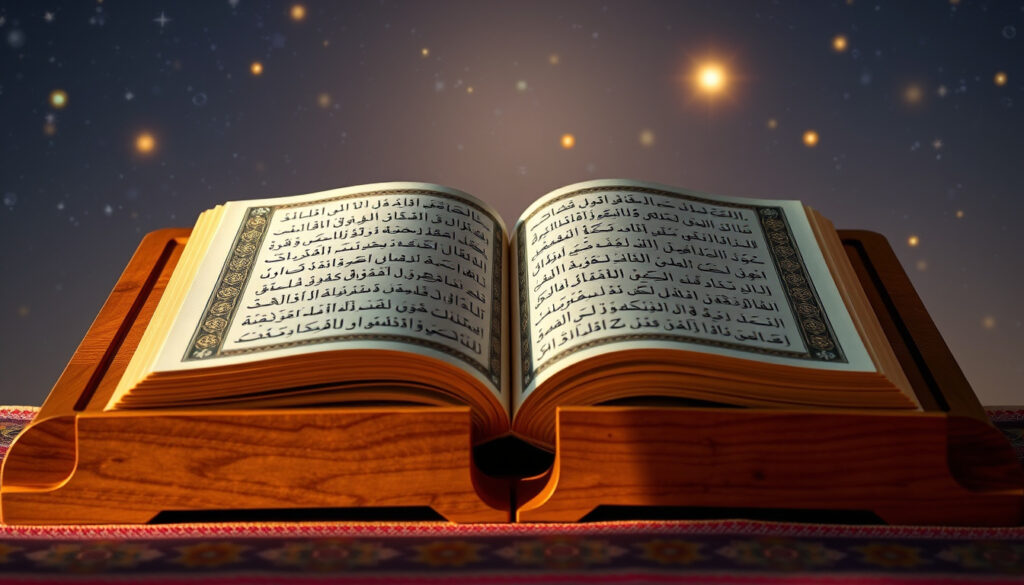
Last 2 Ayat of Surah Baqarah – Text, Translation & Benefits
The final two verses of Surah Al-Baqarah hold a distinguished place in Islamic tradition. These verses, numbered 285 and 286, conclude the second and longest chapter of the Quran with declarations of faith and a heartfelt supplication. Believers across generations have turned to these ayats for protection, mercy, and spiritual fortitude, particularly during the quiet hours of night.
Scholars consistently emphasize the unique virtues associated with reciting these verses. Multiple authenticated hadiths from collections including Sahih al-Bukhari and Sahih Muslim describe the blessings awaiting those who commit these ayats to memory and recite them regularly. The content that follows presents the complete Arabic text, translation, transliteration, and a comprehensive overview of what Islamic sources say about their rewards.
What Are the Last 2 Ayat of Surah Baqarah in Arabic and English?
Surah Al-Baqarah verses 285 and 286 were revealed in Medina and form an integral part of the chapter’s conclusion. The first verse affirms unwavering belief in Allah’s revelations, His angels, His scriptures, and all His messengers without making distinctions among them. The second verse contains a profound supplication that acknowledges human limitations while seeking divine mercy and assistance.
285–286
Belief & Prayer
Protection from Shaytan
Approximately 3 minutes
Arabic Text
آمَنَ الرَّسُولُ بِمَا أُنْزِلَ إِلَيْهِ مِنْ رَبِّهِ وَالْمُؤْمِنُونَ ۚ كُلٌّ آمَنَ بِاللَّهِ وَمَلَائِكَتِهِ وَكُتُبِهِ وَرُسُلِهِ لَا نُفَرِّقُ بَيْنَ أَحَدٍ مِنْ رُسُلِهِ ۚ وَقَالُوا سَمِعْنَا وَأَطَعْنَا ۖ غُفْرَانَكَ رَبَّنَا وَإِلَيْكَ الْمَصِيرُ لَا يُكَلِّفُ اللَّهُ نَفْسًا إِلَّا وُسْعَهَا ۚ لَهَا مَا كَسَبَتْ وَعَلَيْهَا مَا اكْتَسَبَتْ ۗ رَبَّنَا لَا تُؤَاخِذْنَا إِنْ نَسِينَا أَوْ أَخْطَأْنَا ۗ رَبَّنَا وَلَا تَحْمِلْ عَلَيْنَا إِصْرًا كَمَا حَمَلْتَهُ عَلَى الَّذِينَ مِنْ قَبْلِنَا ۗ رَبَّنَا وَلَا تُحَمِّلْنَا مَا لَا طَاقَةَ لَنَا بِهِ ۖ وَاعْفُ عَنَّا وَاغْفِرْ لَنَا وَارْحَمْنَا ۚ أَنْتَ مَوْلَانَا فَانْصُرْنَا عَلَى الْقَوْمِ الْكَافِرِينَ
English Translation
The Messenger has believed in what was revealed to him from his Lord, and [so have] the believers. All of them have believed in Allah and His angels and His books and His messengers, [saying], “We make no distinction between any of His messengers.” And they say, “We hear and we obey. [We seek] Your forgiveness, our Lord, and to You is the [final] destination.” Allah does not charge a soul except [with that within] its capacity. It will have [the consequence of] what [good] it has gained, and it will bear [the consequence of] what [evil] it has earned. “Our Lord, do not impose blame upon us if we have forgotten or erred. Our Lord, and lay not upon us a burden like that which You laid upon those before us. Our Lord, and burden us not with that which we have no ability to bear. And pardon us; and forgive us; and have mercy upon us. You are our protector, so give us victory over the disbelieving people.”
Key Insights
- Reciting these ayats at night provides spiritual sufficiency against all forms of harm
- Shaytan avoids homes where Surah Al-Baqarah is recited, as stated in authenticated hadiths
- The supplication acknowledges that Allah does not burden any soul beyond its capacity
- These verses were revealed during the Prophet Muhammad’s Night Journey (Isra and Mi’raj)
- Ibn Kathir’s tafsir describes them as affirmations of complete faith and pleas for divine mercy
- Scholarly consensus holds these ayats in particularly high regard among Quranic passages
- The dua seeks forgiveness, protection, and victory over disbelief
| Aspect | Details |
|---|---|
| Surah | Al-Baqarah (2) |
| Ayat | 285–286 |
| Revelation Place | Medina |
| Word Count | Approximately 100 words |
| Primary Hadith Source | Sunan an-Nasa’i 451, Sahih al-Bukhari 5009 |
| Tafsir Reference | Ibn Kathir |
What Are the Benefits and Rewards of Reciting the Last 2 Ayat of Surah Baqarah?
Islamic tradition assigns remarkable virtues to those who recite the final verses of Surah Al-Baqarah. The Prophet Muhammad, peace be upon him, described these ayats as sufficient protection for anyone who recites them at night. This concept of spiritual sufficiency appears repeatedly in authenticated narrations, establishing a firm foundation for the practice among Muslims worldwide.
Nightly Protection and Spiritual Sufficiency
Abu Mas’ud Al-Ansari reported that the Messenger of Allah said: “If anyone recited two verses from the last of Surah al-Baqarah at night, they will be sufficient for him.” This narration, recorded in Sunan an-Nasa’i with a sahih chain, forms the basis for the widespread custom of reciting these verses before sleep. Scholars interpret “sufficient” to mean protection from nightmares, spiritual disturbances, and supernatural harm during the night hours.
Reciting these verses three times at night is mentioned in some traditions as providing extra fortification. Many Muslims incorporate this practice into their evening adhkar routine, particularly after the Isha prayer.
Rewards on the Day of Judgment
Sahih Muslim contains a hadith where the Prophet described Surah Al-Baqarah as interceding on behalf of its reader on the Day of Judgment. The chapter, with these final ayats at its conclusion, will appear like two clouds or flocks of birds providing shade. This intercessory quality distinguishes Surah Al-Baqarah from other chapters and explains its prominence in daily recitation practices.
Forgiveness and Mercy
The supplication embedded in verse 286 directly asks Allah for pardon and forgiveness. Tafsir Ibn Kathir explains that this dua acknowledges human fallibility—forgetting and erring are natural aspects of human existence. By seeking forgiveness, the reciter aligns with a fundamental principle of Islamic theology: divine mercy supersedes human shortcomings. The verse explicitly requests relief from burdens that exceeded the capacity of previous nations, highlighting Allah’s compassion toward believers.
The benefits attributed to these verses are supported by sahih narrations from Sahih al-Bukhari, Sahih Muslim, Sunan an-Nasa’i, and Jami’ at-Tirmidhi. No major scholarly dispute exists regarding the authenticity of these sources.
What Is the Transliteration of the Last 2 Ayat of Surah Baqarah?
For those learning Arabic or preferring to recite using romanized text, the transliteration of these verses provides valuable assistance. The following transliteration follows standard conventions used in educational materials and maintains the rhythm of the original Arabic.
Complete Transliteration
Āmanar-rasūlu bimā unzila ilaihi mir-rabbihi wal-mu’minūn. Kullun āmanabillāhi wa malā’ikatihi wa kutubihi wa rusulih. Lā nufarriqu baina aḥadin mir-rusulih. Wa qālū saminā wa aṭa’nā. Guf’rānakar-rabbana wa ilaikal-maṣīr.
Lā yukallifullāhu nafsan illā wus’ahā. Lahā mā kasabat wa ‘alaihā maktasabat. Rabbanā lā tu’ākhidhnā in-nasīnā aw akhṭa’nā. Rabbanā wa lā taḥmil ‘alainā iṣran-kamā ḥamaltahu ‘alalladhīna min-qablinā. Rabbanā wa lā tuḥammilnā mā lā ṭāqata lanā bih. Wa’fu ‘annā waghfir lanā warḥamnā. Anta mawlānā fansurnā ‘alal-qawmil-kāfirīn.
Pronunciation Guidance
Several sounds in this transliteration require particular attention. The letter ‘ayn (represented by ‘ ) indicates a guttural sound produced from the throat. The ha (ḥ) represents a stronger h sound made with breath friction in the throat. The qaf (q) differs from the kaf (k) by being pronounced further back in the mouth. Mastering these distinctive Arabic phonemes enhances the spiritual experience of recitation.
Where Can I Find the Last 2 Ayat of Surah Baqarah in Urdu and PDF?
Urdu translations of these verses are widely available through various Islamic websites and publications. The Urdu rendering captures the essence of the Arabic original while making the meaning accessible to Urdu-speaking audiences. These translations maintain fidelity to the source text while using idiomatic expressions familiar to South Asian readers.
Online Resources
Multiple websites offer free access to the complete text with Urdu translation. Surah Baqarah Last Two Ayats provides side-by-side Arabic and Urdu text along with explanatory notes. Similarly, dedicated Islamic learning platforms host downloadable materials suitable for personal study or classroom use.
PDF Downloads
Several digital repositories contain PDF compilations that include the Arabic text, English translation, transliteration, and commentary on benefits. Scribd hosts one such document that combines textual content with hadith references. These resources prove particularly useful for memorization efforts and for those who prefer studying from printed materials.
Video Recitations
Audio and video recitations featuring renowned Qaris are available on platforms like YouTube. These recordings demonstrate proper tajweed rules and provide an auditory model for learners. Scholars recommend listening to experienced reciters to internalize the correct melody and pronunciation patterns associated with these verses.
When downloading PDF materials, verify that sources cite authenticated hadith chains. Reputable platforms typically include source attributions for all benefits or rewards mentioned in accompanying commentary. To learn more about the cast of the Daddy Issues TV series, you can visit $Daddy Issues TV series cast.
Historical Timeline of the Last Two Ayat
Understanding when and under what circumstances these verses were revealed provides valuable context for their interpretation. Islamic scholarship has documented the chronology of Quranic revelations with considerable precision.
- Revelation Period: These verses were revealed during the Medina period, approximately one year before the Hijra, according to some scholars, or during the latter part of the Prophet’s time in Mecca according to others.
- Isra and Mi’raj Context: Multiple sources indicate these ayats were revealed during or connected to the Prophet Muhammad’s Night Journey (Isra) and Ascension (Mi’raj), lending them special significance in Islamic tradition.
- Early Documentation: The companions, including Abu Mas’ud Al-Ansari, transmitted the hadiths explaining these verses’ virtues during the Prophet’s lifetime.
- Tafsir Compilation: Ibn Kathir compiled his extensive commentary on these verses in the 14th century, drawing from earlier sources including the works of Ibn Jarir and Ibn Abi Hatim.
- Modern Practice: The custom of reciting these ayats before sleeping became widespread across Muslim communities by the medieval period and continues today as part of recommended evening adhkar.
What Is Established Versus What Remains Unclear
Scholarship distinguishes between firmly established facts about these verses and areas where some ambiguity remains. This clarity helps readers understand the reliability of various claims circulating in popular literature.
| Established Information | Information That Remains Unclear |
|---|---|
| The Arabic text is part of canonical Quran | Exact chronological order relative to other verses in Surah Al-Baqarah |
| Hadith sources (Bukhari, Muslim, Nasa’i) support nightly recitation benefits | Specific mechanisms of spiritual protection mentioned in popular literature |
| Revelation occurred in the Medina period | Whether certain specific hadiths about recitation quantity are mutawatir or ahad |
| The verses contain a dua asking for mercy and forgiveness | Some scholarly opinions on whether reciting three times provides additional benefits |
The Context and Meaning of the Supplication
Verse 286 presents a structured supplication that reflects core Islamic principles regarding human responsibility and divine mercy. The dua progresses from acknowledging Allah’s justice to seeking His forgiveness, then requesting relief from excessive burdens, and finally asking for victory over obstacles to faith.
Tafsir Ibn Kathir emphasizes that this supplication mirrors the relationship between a servant and their Lord. Humans inevitably forget and commit errors, yet divine compassion remains accessible through sincere supplication. The mention of previous nations bearing heavy burdens serves as historical reminder that Allah tailors obligations to each community’s capacity.
When compared to Surah Al-Hashr’s concluding verses (59:22-24), which primarily praise Allah’s attributes, the last ayats of Surah Al-Baqarah stand apart for their personal supplicatory nature. While both passages affirm Tawhid, Surah Al-Baqarah’s ending uniquely combines affirmation of faith with direct appeal for mercy and assistance.
Sources and Scholarly Attributions
“If anyone recited two verses from the last of Surah al-Baqarah at night, they will be sufficient for him.”
— Narrated by Abu Mas’ud Al-Ansari, Sunan an-Nasa’i 451 (Sahih)
“Recite Surah al-Baqara, for indeed magicians cannot confront it, and indeed it is like two clouds or two shades, or like two wings of a bird, pleading for its companion.”
These narrations form the scholarly foundation for the rewards attributed to reciting these verses. The chain of transmission for each hadith has been examined by hadith scholars across generations, with all four collections considered reliable sources within Islamic tradition.
Summary
The last two ayats of Surah Al-Baqarah (verses 285-286) conclude the Quran’s second chapter with declarations of comprehensive faith and a moving supplication for divine mercy. Countless believers have incorporated these verses into their nightly routine based on authenticated hadiths promising protection and spiritual sufficiency. Whether recited for memorization, seeking forgiveness, or simply as part of daily Quran engagement, these verses continue to hold a special place in Muslim spiritual practice. For those seeking to explore the topic further, Last 2 Ayats of Surah Baqarah offers additional commentary and resources.
Frequently Asked Questions
How many times should I recite the last 2 ayats of Surah Baqarah at night?
According to some narrations, reciting these verses once at night provides sufficient protection. Some traditions mention reciting them three times for additional fortification, though this practice varies among scholars and communities.
Can I recite the last 2 ayats during the day instead of at night?
While the primary virtue relates to nighttime recitation, these verses may be recited at any time. The hadiths specifically mention night recitation, but general Quran recitation carries reward regardless of timing.
Do the last 3 ayats of Surah Hashr have similar benefits?
Surah Al-Hashr’s concluding verses (59:22-24) praise Allah’s divine names and attributes. They carry their own virtues but differ in focus from the supplicatory nature of Surah Al-Baqarah’s final ayats.
What is the correct pronunciation for these verses?
Learning from a qualified teacher is recommended for proper tajweed. The transliteration provided in this article serves as a guide, but audio recordings from established Qaris offer the most reliable pronunciation models.
Are there any conditions for receiving the promised protection?
The hadiths emphasize sincere recitation with faith in Allah. The protection mentioned relates to spiritual and supernatural harms rather than physical dangers, and scholars advise maintaining reasonable precautions alongside spiritual practices.
Where can I find authentic hadith references for these verses?
Primary sources include Sahih al-Bukhari (hadith 5009), Sahih Muslim (hadith 804a), Sunan an-Nasa’i (hadith 451), and Jami’ at-Tirmidhi (hadith 2882). These collections are available through reputable Islamic libraries and verified online databases.
Do children benefit from reciting these verses?
Yes, children can recite these verses and receive reward according to Islamic teachings. Many families encourage children to memorize these verses as an introduction to Quranic recitation, as the relatively short length makes memorization achievable.
More related posts
 Newcastle vs Leicester City – Prediction, Result and Stats
 Liza Goddard – Age, Family, Career and Net Worth Facts
 Ethan Hawke – Biography, Movies, Family, and More
 Irita Marriott – Age, Career, TV Shows and Auction House Profile
 Brock Lesnar – Age, Height, Net Worth, Wife, and Retirement Status
 Kitchen Worktops – UK Guide to Materials, Prices & Suppliers 2025
 Light Switch – Complete UK Wiring, Types & Buying Guide
 When Does Premier League Start – 2025/26 and 2026/27 Dates Confirmed
