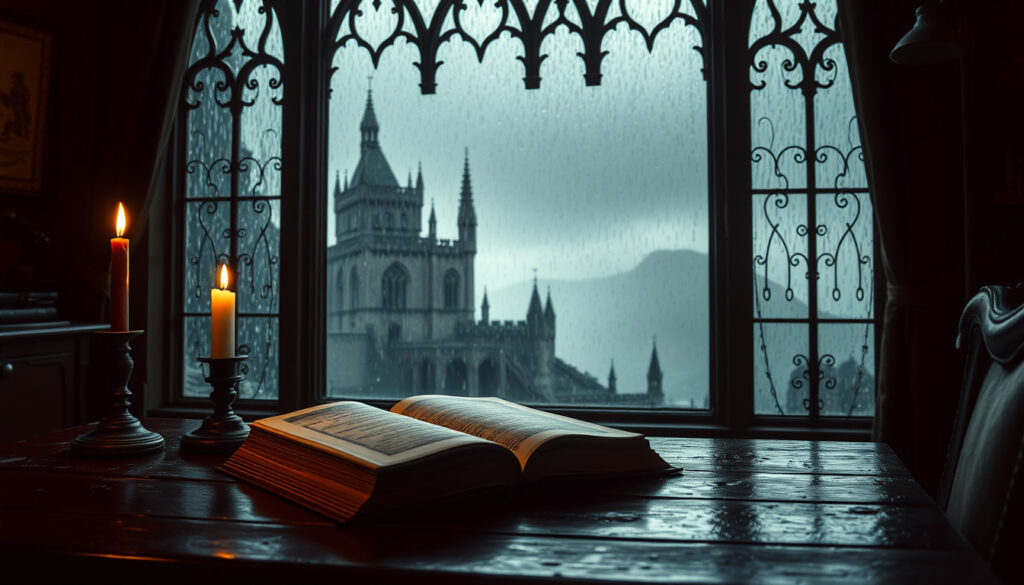
Bram Stoker – Biography, Books, Dracula and Death Explained
Bram Stoker was an Irish writer, theatre manager and civil servant who became one of the most influential figures in Gothic horror literature. Born in Dublin in 1847, he is best remembered for his 1897 novel Dracula, a book that defined the modern vampire and has never been out of print. But Stoker was far more than a one-book author: he managed London’s Lyceum Theatre for nearly three decades, wrote several other novels and short stories, and moved in literary circles that included Oscar Wilde and Arthur Conan Doyle.
Stoker’s life was a blend of administrative discipline and creative ambition. While his day job involved managing the demanding actor Henry Irving, his nights were spent crafting a story that drew on Eastern European folklore, Irish storytelling traditions, and the atmospheric coastal town of Whitby. The result was a novel that continues to shape how the world imagines vampires, more than 125 years after its publication.
His personal life, too, has drawn steady curiosity. Married to the former aspiring actress Florence Balcombe, Stoker had one son, Noel. The circumstances of his death remain the subject of debate among biographers, with official records and modern interpretations offering different conclusions. This article examines what is known and what remains uncertain about the man behind the Count.
What is Bram Stoker Best Known For?
8 November 1847, Clontarf, Dublin, Ireland
20 April 1912, London, England (aged 64)
Writing the Gothic horror novel Dracula (1897)
Author, civil servant, theatre manager
Key Insights About Bram Stoker
- Stoker was not only a writer but also the business manager of the Lyceum Theatre in London, working closely with actor Henry Irving.
- Dracula has never been out of print and is the basis for countless films, TV shows, and adaptations.
- Stoker’s wife, Florence Balcombe, was once courted by Oscar Wilde; the two remained friends.
- The character of Dracula was partly inspired by the historical Vlad the Impaler, along with Irish folklore and Eastern European vampire legends.
- Stoker’s death certificate lists “locomotor ataxia” (tabes dorsalis) as cause, often attributed to tertiary syphilis, though some scholars debate this.
| Attribute | Detail |
|---|---|
| Full Name | Abraham Stoker |
| Birth | 8 November 1847, Clontarf, Dublin, Ireland |
| Death | 20 April 1912, London, England |
| Cause of Death | Locomotor ataxia (tabes dorsalis) – likely tertiary syphilis; debated by scholars |
| Spouse | Florence Balcombe (m. 1878) |
| Children | Irving Stoker (born 1879) |
| Siblings | 7 (including George Stoker) |
| Notable Work | Dracula (1897) |
| Other Works | The Snake’s Pass, The Mystery of the Sea, The Jewel of Seven Stars, The Lair of the White Worm |
| Genre | Gothic horror, romance, adventure |
| Burial | Golders Green Crematorium, London |
The Novel Dracula (1897)
Dracula is an epistolary novel told through diary entries, letters, newspaper clippings, and ship logs. It follows the vampire Count Dracula as he moves from Transylvania to England in search of fresh blood, and the group of people—including Professor Abraham Van Helsing, Jonathan Harker, and Mina Murray—who pursue him. Stoker began work on the novel around 1890, and its original working title was “The Un-Dead,” according to the Bram Stoker Estate. The Count was initially called “Wampyr” before Stoker adopted the name “Dracula,” which he reportedly found in a library in Whitby.
Other Books by Bram Stoker
Stoker’s first published book was a legal-administrative manual, The Duties of Clerks of Petty Sessions in Ireland (1879). His first work of fiction was the short-story collection Under the Sunset (1881). He went on to write several adventure novels and many short stories. Notable full-length works include The Snake’s Pass (1890), The Jewel of Seven Stars (1904), and The Lair of the White Worm (1911). Despite the enduring fame of Dracula, Stoker was a prolific author whose output extended well beyond Gothic horror.
The Character of Van Helsing
Professor Abraham Van Helsing is a Dutch doctor and vampire hunter who serves as the intellectual and moral anchor of Dracula. He represents Victorian rationalism confronting the supernatural and is the character who understands that science alone cannot defeat the Count. Van Helsing’s tactics—consecrated wafers, wooden stakes, garlic—have become standard tools in vampire fiction. The character has been portrayed in numerous adaptations, from Edward Van Sloan in the 1931 film to Anthony Hopkins in Francis Ford Coppola’s 1992 version.
What Was Bram Stoker’s Personal Life Like?
Early Life and Birth
Abraham Stoker was born on 8 November 1847 in Clontarf, then a coastal resort on the outskirts of Dublin, Ireland. He was the third of seven children born to Abraham Stoker, Sr., a civil servant, and Charlotte Thornley Stoker, a charity worker and writer, according to the Bram Stoker Estate. As a child, Stoker suffered from an unidentified illness that left him bedridden, and his mother’s storytelling during this period is often cited as a formative influence on his imaginative development.
He studied mathematics at Trinity College Dublin, graduating in 1867, and later worked in the Irish civil service while also writing freelance journalism and drama criticism. This combination of administrative work and literary interests would define much of his adult life.
Marriage to Florence Balcombe
In 1878, Stoker married Florence Anne Lemon Balcombe, an aspiring actress who had previously been courted by Oscar Wilde. Despite that earlier connection, Wilde and Stoker remained part of the same social circles. The couple moved to London that same year so that Stoker could take up the position of manager at Henry Irving’s Lyceum Theatre—a role that would occupy him for the next 27 years. According to Britannica, Stoker wrote as many as 50 letters a day for Irving and accompanied him on tours of the United States.
Stoker’s wife, Florence Balcombe, was once courted by Oscar Wilde. The two literary figures remained on friendly terms within London’s artistic circles, illustrating how closely connected Stoker was to the leading cultural figures of his day.
Children and Descendants
Bram and Florence Stoker had one child, a son named Noel (also recorded as Irving Noel Thornley Stoker), born in 1879. Noel was the couple’s only child. The Stoker family line continues through Noel’s descendants. The name Merlin van Lawick occasionally appears in discussions of Stoker’s living relatives, though specific public records about this connection remain limited.
Sibling: George Stoker
George Stoker was one of Bram’s six siblings. While less documented than his famous brother, George appears in family records as part of the Stoker household in Clontarf. The family of seven children was raised by Abraham Stoker, Sr. and Charlotte Thornley Stoker, and several of Bram’s siblings led notable lives of their own, though detailed biographical information about George is sparse in the available sources.
How Did Bram Stoker Die?
Cause of Death: Medical and Historical Debate
Bram Stoker died on 20 April 1912 in London at the age of 64. The exact cause of his death is not entirely settled in the available records. According to Britannica, the cause of death is disputed. One source notes that his death certificate listed “exhaustion” as the cause, while also mentioning Bright’s disease (a kidney condition). Another interpretation points to locomotor ataxia (tabes dorsalis), a degeneration of the spinal cord often caused by untreated tertiary syphilis.
Some biographers have questioned the syphilis diagnosis, suggesting alternative explanations such as stroke or simply the cumulative effects of decades of overwork. The uncertainty reflects both the limits of early 20th-century medical record-keeping and the understandable sensitivity surrounding the subject at the time.
Burial Site and Memorial
Stoker’s remains were cremated at Golders Green Crematorium in London, where his ashes remain. The crematorium is a popular destination for literary pilgrims, alongside other notable figures interred there. There is no single, universally recognised public memorial to Stoker in Dublin or London, though his legacy is commemorated through literary festivals, blue plaques, and the continued cultural prominence of his most famous creation.
Why is Bram Stoker Associated with Whitby?
The Yorkshire coastal town of Whitby holds a specific and well-documented place in the creation of Dracula. According to the Bram Stoker Estate, Stoker was on vacation in Whitby in 1890 when he discovered the name “Dracula” in the local library. The town’s dramatic setting—with its ruined abbey overlooking the North Sea, its narrow streets, and its long history of shipwrecks and folklore—provided direct inspiration for several key scenes in the novel.
In Dracula, the Count’s ship, the Demeter, runs aground in Whitby harbour, and the subsequent events unfold against the town’s atmospheric backdrop. Whitby has since become a literary destination for fans of the novel, with walking tours, annual Goth festivals, and a museum dedicated to the Dracula connection.
Whitby is not just a tourist attraction—it is a factual part of Stoker’s research process. He was staying in the town when he found the name “Dracula” in the library, and the novel vividly describes the abbey ruins, the harbour, and the coastline. For readers wanting to trace Stoker’s footsteps, Whitby offers the most direct connection to the novel’s creation.
What Inspired Bram Stoker to Write Dracula?
Literary and Folkloric Influences
Stoker drew on a wide range of sources for Dracula. Eastern European vampire folklore provided the core mythology—creatures that rise from the grave to drink the blood of the living. Stoker’s mother’s own storytelling, particularly tales from Irish folklore, is frequently cited as a childhood influence. The novel also reflects Victorian anxieties about immigration, disease, and female sexuality, which scholars continue to analyse.
The question of whether Edgar Allan Poe directly influenced Stoker is not clearly documented in the available sources. The two writers share a Gothic sensibility and a preoccupation with psychological horror, but concrete evidence that Stoker consciously drew from Poe’s work is debated among literary historians.
Real-Life Inspiration: Vlad the Impaler and Folklore
The historical figure Vlad III Dracula, also known as Vlad the Impaler, was a 15th-century ruler of Wallachia (in present-day Romania) who became notorious for his brutal methods of punishment. Stoker adopted the name “Dracula” from this figure, and the novel presents its Count as a descendant of Vlad, though not Vlad himself. According to SparkNotes, the Dracula family in the novel is based on a real 15th-century family. Stoker also incorporated details from Transylvanian geography and local superstitions that he encountered during his research.
Timeline of Bram Stoker’s Life
- 1847 – Born 8 November in Clontarf, Dublin, Ireland. (Source: Britannica)
- 1864–1870 – Attended Trinity College Dublin, graduated with honours in mathematics. (Source: SparkNotes)
- 1871–1878 – Worked as a civil servant in Dublin Castle; also worked as a freelance journalist and drama critic. (Source: Britannica)
- 1878 – Married Florence Balcombe; moved to London to manage the Lyceum Theatre for Henry Irving. (Source: Bram Stoker Estate)
- 1879 – Birth of only son, Noel Irving Thornley Stoker. (Source: SparkNotes)
- 1890 – Began work on what would become Dracula; discovered the name “Dracula” in a Whitby library. (Source: Bram Stoker Estate)
- 1897 – Published Dracula on 26 May. (Source: Britannica)
- 1912 – Died 20 April in London; cremated at Golders Green Crematorium. (Source: Britannica)
What Is Certain and What Remains Uncertain About Bram Stoker?
| Topic | Established Information | What Remains Unclear |
|---|---|---|
| Cause of death | Official records list locomotor ataxia; death certificate also mentions exhaustion and Bright’s disease. | Some biographers question the syphilis diagnosis, suggesting stroke or overwork as alternatives. (Source: Britannica) |
| Inspiration for Dracula | The name and some attributes come from Vlad the Impaler; Whitby provided setting and the name discovery. | The degree of direct influence from Irish folklore versus Eastern European sources continues to be debated. (Source: Britannica) |
Cultural and Literary Impact of Bram Stoker’s Dracula
Dracula codified the modern vampire archetype, blending Gothic horror with Victorian anxieties about sexuality, immigration, and disease. The novel’s influence extends far beyond literature: it has shaped film, television, theatre, and even tourism in Transylvania and Whitby. Stoker’s use of Whitby as a setting gave the novel a distinct sense of place, drawing on local legends and the atmospheric ruins of Whitby Abbey.
The character of Van Helsing represents Victorian rationalism battling superstition, but also European “otherness”—a Dutch doctor who knows more than his English counterparts. Stoker’s background as a theatre manager influenced the novel’s dramatic pacing and set-piece scenes, such as the shipwreck and the final chase. For readers interested in other biographical deep dives, the article Rudyard Kipling – Biography, Poems and Complete Guide offers a similar comprehensive look at a major literary figure of the same era.
Key Sources and Quotes About Bram Stoker
“Abraham Stoker (8 November 1847 – 20 April 1912) was an Irish writer, barrister, and theatre manager. … He was the author of Dracula (1897) and the creator of…”
“Irish writer best known as the author of the Gothic horror tale Dracula (1897).”
“Abraham (Bram) Stoker was born on November 8th, 1847, in Clontarf, then a popular holiday resort on the outskirts of Dublin, Ireland. He was the third of seven children…”
Summary: The Lasting Legacy of Bram Stoker
Bram Stoker was a Dublin-born civil servant, theatre manager, and author whose novel Dracula has left an indelible mark on world literature and popular culture. While he wrote several other books and lived a busy professional life at the heart of London’s theatrical scene, it is his vampire count that continues to haunt the collective imagination. Stoker died in London in 1912, and though the exact cause remains debated, his legacy is undisputed. For those interested in how fictional characters achieve lasting cultural resonance, the character study Thomas Shelby – Complete Character Guide and Biography provides an insightful parallel.
Frequently Asked Questions About Bram Stoker
Who is Merlin van Lawick related to Bram Stoker?
Merlin van Lawick is believed to be a descendant of Bram Stoker through his son Irving Stoker. Specific details are limited in public records, but the Bram Stoker Estate occasionally mentions him as a family member involved in preserving Stoker’s legacy.
What is the connection between Edgar Allan Poe and Bram Stoker?
While there is no direct documented influence, literary scholars note similarities in Gothic atmosphere and themes of psychological horror. Stoker may have been aware of Poe’s works, but concrete evidence of influence is debated.
What is the Bram Stoker Estate?
The Bram Stoker Estate is the organization that manages the intellectual property and legacy of Bram Stoker and his descendants. It maintains the official website bramstokerestate.com, provides biographical information, and licenses rights to Stoker’s works beyond Dracula.
Did Bram Stoker write only one book?
No, Stoker wrote several novels, short stories, and non-fiction. Besides Dracula, notable works include The Snake’s Pass (1890), The Mystery of the Sea (1902), The Jewel of Seven Stars (1903), and The Lair of the White Worm (1911).
Is Dracula based on a real person?
Yes, partly. The historical Vlad III Dracula (Vlad the Impaler) of Wallachia provided the name and some characteristics. Stoker also incorporated folklore about vampires from Eastern Europe and Ireland.
Where is Bram Stoker buried?
Bram Stoker’s remains were cremated and are held at Golders Green Crematorium in London, England. There is no traditional gravesite but a memorial commemorates his life there.
Did Bram Stoker work as a barrister?
The available sources identify Stoker as a civil servant, journalist, drama critic, and theatre manager, not as a barrister. His early book The Duties of Clerks of Petty Sessions in Ireland was a legal-administrative work, which may cause confusion on this point.
What was Stoker’s relationship with Henry Irving?
Stoker met Henry Irving while working as a drama critic. He became Irving’s manager at the Lyceum Theatre in 1878 and remained in that role until Irving’s death in 1905. Stoker wrote as many as 50 letters a day for Irving and accompanied him on American tours.
More related posts
 14 Day Weather Forecast – UK Bank Holiday Outlook
 Charmian Carr – Her Life, Death, and Lasting Legacy
 James Marsden – Biography, Net Worth, and Best Roles
 Toyota Faulty Display Recall – Check If Your Vehicle Is Affected Now
 Willow Pa ture Country Park – Luxury Lodge , Price & Hone t Review
 When Is Valentine’s Day 2025 – Date, History and Valentine’s Week
 Sanjay Kapoor – Biography, Family, Movies And Net Worth
 Isle of Man TT – 2024 Results History Safety Guide
